 ultimate-guide
Why Goldendoodle Prices Differ: A Breeder's Guide
Table of Contents
- Why Goldendoodle Prices Vary So Much
- Average Cost of a Goldendoodle by Generation and Size
- Breeding Quality and Health Testing Costs
- Reputable Breeder vs Backyard Breeder: What You're Paying For
- Hidden Costs Beyond the Puppy Price
- Decoding Breeder Contracts and Health Warranties
- How to Spot a Puppy Mill and Avoid Scams
- Conclusion
- Frequently Asked Questions
Last Updated: September 1, 2026
Why Goldendoodle Prices Vary So Much
When you're shopping for a Goldendoodle puppy, you'll notice something immediately: prices swing wildly. One breeder quotes $2,500, another asks $4,500, and a third seems suspiciously cheap at $1,200. This isn't random. Understanding why goldendoodle prices differ requires looking beyond the sticker price at what you're actually buying.
The variation comes down to genetics, health investment, breeding philosophy, and what happens before the puppy reaches your door. A breeder who invests in genetic health testing, early socialization, and professional training isn't charging more out of greed, they're charging for measurable differences in the puppy you receive. Meanwhile, operations cutting corners on health screening or socialization aren't just cheaper; they're fundamentally different businesses operating on different standards.
At Blue Ridge Doodles, we've spent over 18 years understanding these differences firsthand. What we've learned is that goldendoodle prices reflect real choices: choices about which dogs breed, how puppies are raised, what health guarantees back the purchase, and how much support you get after bringing your puppy home. The breeder who charges more isn't always better, but the breeder charging significantly less is almost always cutting something critical.
Average Cost of a Goldendoodle by Generation and Size
The baseline price for a Goldendoodle puppy typically reflects two variables: generation and size. F1 Goldendoodles (first-generation crosses between a Poodle and Golden Retriever) cost less than F1B or F1BB generations because the genetics are less predictable. An F1B Goldendoodle (75% Poodle, 25% Golden Retriever) offers more consistent coat texture and shedding characteristics, which breeders price accordingly.
Size matters equally. A Standard Goldendoodle commands a higher price than a Miniature Goldendoodle because Standard litters require larger parent dogs and produce fewer puppies per breeding cycle. Miniature versions, bred from smaller Poodles, yield more puppies and cost less to produce, which typically translates to lower pricing.
What you're paying for at this stage isn't just genetics, it's predictability. An F1B Standard Goldendoodle from a reputable breeder costs more because the breeder has invested in understanding which parent dogs produce puppies with the temperament, coat type, and health profile families actually want. This knowledge compounds over years of selective breeding.
Breeders who've done genetic health testing on their breeding stock, testing for hip dysplasia, elbow dysplasia, and eye conditions, factor those costs into pricing. A responsible breeder doesn't hide this investment; they document it and share results with prospective buyers. When a breeder skips this step, goldendoodle prices drop, but so does your confidence that the puppy won't develop costly health problems later.
Breeding Quality and Health Testing Costs
This is where goldendoodle prices diverge most sharply. Ethical breeders conduct genetic health testing before breeding any dog. This includes OFA (Orthopedic Foundation for Animals) screening for hip and elbow dysplasia, eye examinations by board-certified veterinary ophthalmologists, and increasingly, genetic testing for conditions like progressive retinal atrophy (PRA).
These tests cost money, hundreds of dollars per dog, sometimes more. A breeder testing both parents before breeding might spend $1,500-$3,000 on health screening alone, before a single puppy is born (ofa.org). That cost gets distributed across the litter, but it's real. Breeders who skip this step have lower overhead and can undercut competitors significantly.
The difference shows up years later. A puppy from health-tested parents has a lower statistical risk of inheriting hip dysplasia, which can require expensive surgery costing $4,000-$6,000 per hip (vet.cornell.edu). It's not a guarantee, genetics is probabilistic, but it's a meaningful reduction in risk. A puppy from untested parents carries unknown risk, which is why responsible buyers factor this into their decision.
Beyond testing, breeding quality reflects the breeder's commitment to temperament. Some breeders conduct temperament testing on their breeding dogs, selecting for traits like calmness, sociability, and low aggression. Others breed the first dogs that happen to be available. The difference in the resulting puppies' behavior can be substantial.
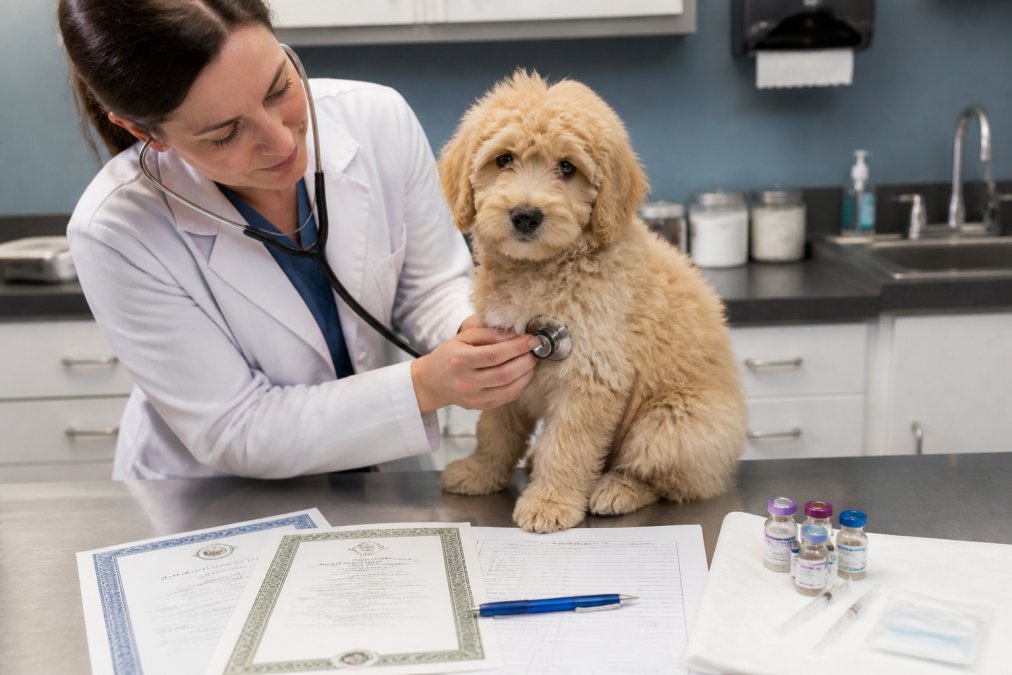
Health guarantees also factor into pricing. A breeder offering a two-year limited health warranty is taking on financial risk; if a puppy develops a genetic condition within that window, the breeder may refund money or replace the puppy. Breeders offering strong warranties price higher because they're insuring against their own breeding decisions.
Reputable Breeder vs Backyard Breeder: What You're Paying For
A reputable breeder operates with transparency. They'll share health testing results, show you the parents, explain their breeding philosophy, and provide references from previous buyers. They've typically been breeding for years, often with involvement in breed clubs or mentorship from experienced breeders. They limit litter frequency to ensure their breeding dogs aren't overworked.
A backyard breeder, someone breeding Goldendoodles as a side income, typically operates with minimal oversight. They may breed dogs without health testing, without genetic diversity considerations, and without understanding of the breed standard. They might breed more frequently, prioritizing volume over puppy quality. Backyard breeders often advertise heavily online and pressure buyers to decide quickly.
The difference in what you're paying for is substantial. With a reputable breeder, you're paying for:
- Health testing documentation
- Early socialization and crate training
- Veterinary care (vaccines, microchipping, health checks)
- Ongoing support and guidance after purchase
- Accountability if problems arise
With a backyard breeder, you're paying for a puppy, often with minimal additional investment in that puppy's wellbeing before it reaches you.

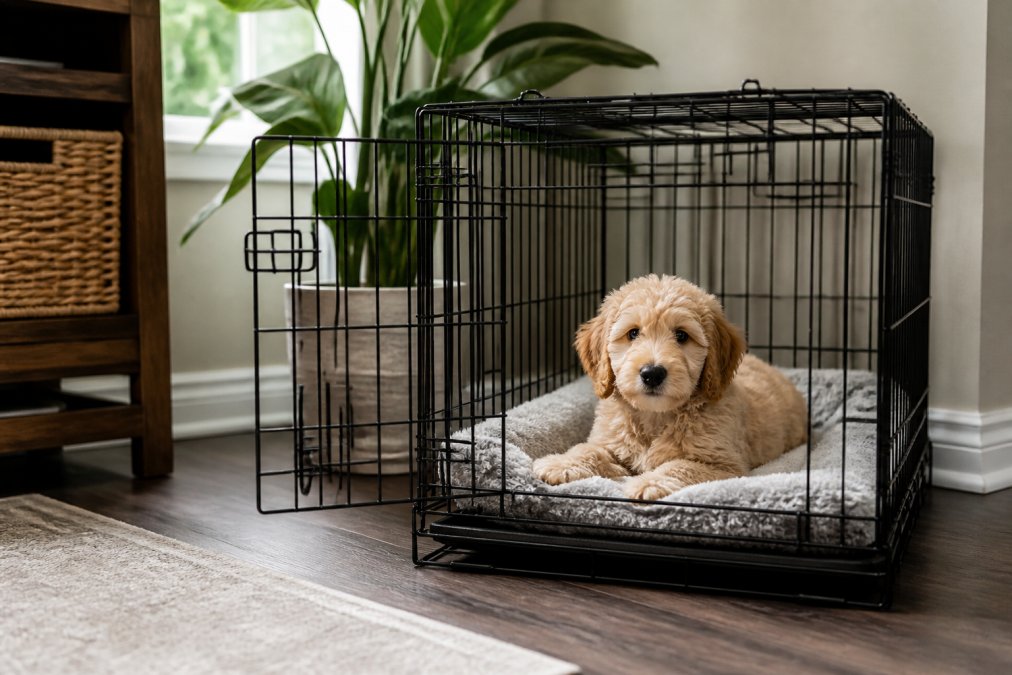
Blue Ridge Doodles approaches breeding as a long-term commitment to families, not a quick transaction. Our puppies receive three weeks of crate training before going home, are microchipped, receive two rounds of booster vaccines, and come with a two-year limited health warranty. This level of preparation costs more upfront but reduces problems later, behavioral issues from poor early training, health surprises from skipped vet care, and the stress of uncertainty about your puppy's background.
Hidden Costs Beyond the Puppy Price
The puppy price is the beginning of your financial commitment, not the end. Responsible buyers budget for costs that arrive after bringing the puppy home.
Veterinary care in the first year is significant. Your puppy will need additional booster vaccines (if the breeder hasn't completed the full series), a spay or neuter surgery (typically $500-$1,500 depending on your location and veterinary practice), and routine wellness exams (avma.org). Goldendoodles are generally healthy, but unexpected issues during puppyhood, ear infections, skin irritation, digestive upset, can add hundreds to your first-year vet bills.
Training costs vary widely. If you're training yourself using online resources, cost is minimal. If you hire a professional trainer for board-and-train programs or group classes, expect $1,500-$5,000 in the first year. Many families find this investment essential; untrained puppies become destructive adolescents, and fixing behavioral problems later costs far more than preventing them upfront.
Grooming is an ongoing expense that surprises many new Goldendoodle owners. These dogs require regular grooming to maintain their coat, typically every 6-8 weeks at a professional groomer, costing $80-$150 per visit. That's $600-$1,800 annually. Home grooming is cheaper but requires equipment and skill. Neglecting grooming leads to matted coats, skin problems, and vet bills that exceed the cost of regular maintenance.
Food, supplies, and miscellaneous care add up quickly. Quality dog food, toys, bedding, and routine supplies easily reach $100-$200 monthly. Over a year, that's $1,200-$2,400.
Emergency veterinary care is unpredictable but necessary to budget for. An unexpected injury, illness, or ingestion of a foreign object can result in emergency vet bills of $2,000-$8,000. Pet insurance can mitigate this risk, costing $30-$60 monthly depending on coverage.
When you add these together, the true cost of Goldendoodle ownership in year one often reaches $3,000-$6,000 beyond the puppy price. Understanding this before buying prevents financial stress and ensures you can provide proper care.
Decoding Breeder Contracts and Health Warranties
A reputable breeder provides a written contract detailing what you're buying and what protections you have. This isn't paperwork to skip; it's your recourse if problems arise.
Key contract elements include:
- Health guarantees (what conditions are covered and for how long)
- Return policies (what happens if the puppy doesn't work out)
- Breeding rights (whether you can breed this puppy, most reputable breeders restrict this)
- Spay/neuter requirements (most contracts require you to alter your pet)
- Lifetime return clause (some breeders will take the dog back at any age if you can't keep it)
A two-year limited health warranty, like the one Blue Ridge Doodles provides, covers genetic health conditions that emerge within that timeframe. This typically includes hip dysplasia, elbow dysplasia, and genetic eye conditions. It usually does NOT cover injuries, illnesses from poor care, or conditions that develop after the warranty period.
Contracts from reputable breeders often restrict breeding rights because indiscriminate breeding undermines the breed. A breeder who allows any buyer to breed their puppy is prioritizing short-term sales over long-term breed health. Contracts requiring spay/neuter for pet-quality puppies serve the same purpose.
Lifetime return clauses reflect a breeder's commitment to their dogs. If you face a major life change, job loss, relocation, health crisis, a breeder with a lifetime return clause will take the dog back rather than see it end up in a shelter. This safety net costs breeders money but demonstrates genuine care beyond the initial sale.
Backyard breeders often provide no contract or a minimal one with no meaningful guarantees. This leaves you unprotected if the puppy develops health problems or behavioral issues. The "savings" from a cheaper puppy evaporate quickly if you're facing unexpected vet bills with no recourse.
How to Spot a Puppy Mill and Avoid Scams
Puppy mills prioritize volume over welfare. They breed dogs frequently, often in poor conditions, with no health screening and minimal socialization. Puppies from mills are at high risk for genetic health problems, behavioral issues, and parasites. They're also more likely to have been separated from their mothers too early, leading to anxiety and difficulty bonding.
Red flags for puppy mills and disreputable operations:
- Multiple litters available simultaneously (suggests breeding for volume, not quality)
- Refusal to let you meet the parents or visit the facility
- Pressure to buy quickly or pay a deposit without meeting the puppy
- No health testing documentation or vague references to "health checks"
- Significantly lower pricing than comparable breeders
- Unwillingness to provide references or follow-up support
- Online advertising that emphasizes "rare colors" or "designer" status
Scams exist too. Some operators post photos of puppies they don't actually have, collect deposits, and disappear. Others ship puppies before payment clears or misrepresent the puppy's age, health, or parentage. Protecting yourself requires verification: ask for video calls with the breeder and puppy, request health testing documentation you can verify independently, and never wire money before seeing the puppy in person or receiving it with a return window.
Responsible breeders expect questions. They'll provide health testing results, references, photos, and videos. They'll discuss their breeding philosophy and explain why they charge what they do. They'll also ask you questions, about your living situation, experience with dogs, and expectations for the puppy. This vetting process protects both the breeder and the buyer.
Conclusion
Why goldendoodle prices differ comes down to investment in genetics, health, socialization, and accountability. A breeder charging more isn't always the right choice, but a breeder charging significantly less is almost always making trade-offs that affect the puppy's health and behavior.
Blue Ridge Doodles has spent over 18 years building relationships with families, not just selling puppies. Our two-year limited health warranty, comprehensive early training, and ongoing support reflect a commitment to your long-term success. When you're ready to bring a Goldendoodle into your family, we'd like to help you find the right match. Apply today to get started.
Frequently Asked Questions
What is a fair price for a goldendoodle?
A fair price reflects the breeder's investment in genetic health testing, socialization, veterinary care, and breeding quality. Reputable breeders who conduct genetic health testing, provide health guarantees, and raise puppies in family environments typically charge more than backyard breeders. The price should align with what's included: health certificates, vaccinations, microchipping, initial training, and warranty coverage. Visit the breeder's website to understand their specific pricing structure and what's included in their puppy package.
Why do goldendoodle health testing costs matter to the breeder's price?
Responsible breeders invest hundreds of dollars in health screening for parent dogs, including hip and elbow evaluations, eye certifications, and genetic testing for conditions like progressive retinal atrophy. These tests identify carriers of hereditary diseases and reduce the risk of passing them to puppies. This proactive approach protects your puppy's long-term health and prevents costly veterinary issues later. Breeders who skip health testing may offer lower prices, but you risk inheriting expensive health problems.
What makes a reputable breeder vs backyard breeder different in terms of cost?
A reputable breeder invests in genetic health testing, maintains health guarantees, provides socialization and training, and stands behind their puppies with ongoing support. A backyard breeder typically focuses on profit with minimal health screening, no guarantee, and limited puppy preparation. While reputable breeders charge more upfront, you're paying for reduced health risk, behavioral stability, and breeder accountability. Backyard breeders may seem cheaper initially, but hidden health costs and behavioral challenges often exceed any savings.
What hidden costs should I expect after bringing a goldendoodle home?
Beyond the initial purchase price, expect veterinary expenses for spay/neuter surgery, ongoing vaccinations, and preventive care. Professional grooming for coat maintenance, quality nutrition, training classes, and emergency veterinary care are also significant. Many new owners underestimate grooming costs, as goldendoodles require regular maintenance to prevent matting. Budget for microchip registration updates, pet insurance, and unexpected health issues. Ask your breeder about post-purchase support and what their health warranty covers to understand your financial responsibility.