 ultimate-guide
Are Goldendoodles Actually Low-Shedding? Facts for 2026
Table of Contents
- Do Goldendoodles Shed? The Honest Answer
- Are Goldendoodles Hypoallergenic for Allergies?
- Goldendoodle Generation Shedding Differences (F1 vs. F1B)
- Key Factors That Influence Shedding Levels
- How to Groom a Goldendoodle to Prevent Matting
- Visual Guide: Spotting a Low-Shedding Puppy Early
- Managing Shedding and Allergies at Home
- Conclusion: Is a Goldendoodle Right for You?
- Frequently Asked Questions
Last Updated: September 6, 2026
Do Goldendoodles Shed? The Honest Answer
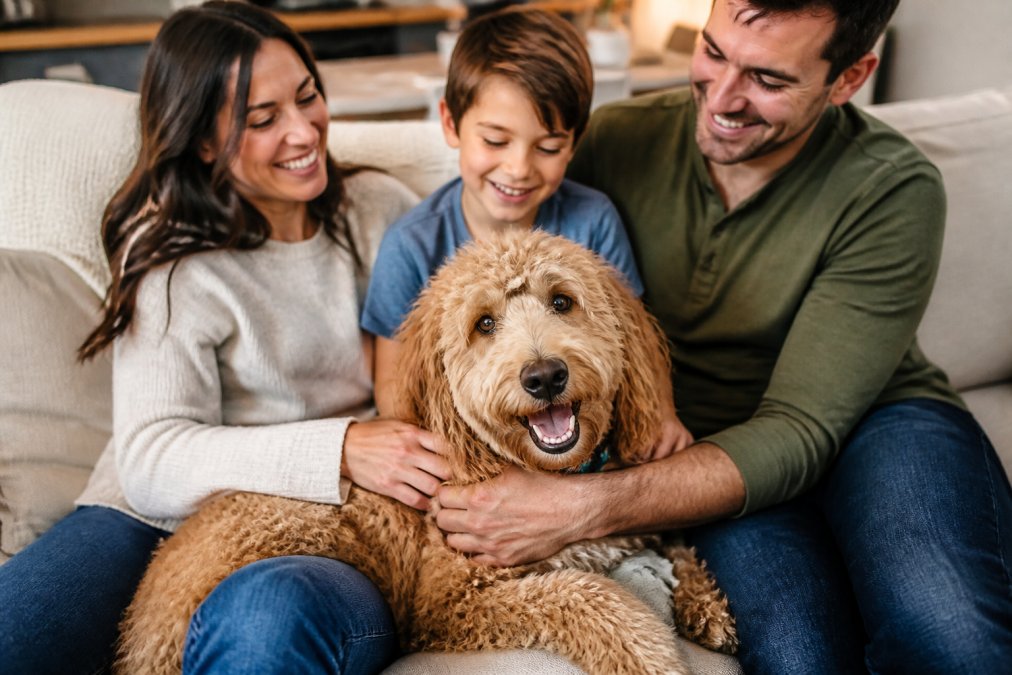
Whether Goldendoodles shed less than other dogs comes down to genetics, coat type, and honest expectation-setting. As a crossbreed between a Golden Retriever and a Poodle, the coat is not guaranteed to be non-shedding: some shed very little, while others shed noticeably more, depending on which parent's genes dominate.
At BLUE RIDGE DOODLES, we've spent over 18 years raising these puppies, and the most common misconception is that a "doodle" automatically means zero shedding. Shedding depends on whether the puppy inherits the Poodle's low-shedding, continuously growing coat or the Retriever's seasonal shedding coat. This guide breaks down the genetics, coat types, and grooming practices that determine how much hair you'll find on your sofa.
Before you fall in love with a fluffy face, understand the three pillars of doodle shedding: generation, coat type, and furnishings. These factors determine whether your dog is a true low-shedder or a surprise shedder.
Are Goldendoodles Hypoallergenic for Allergies?
No dog breed is truly hypoallergenic, and Goldendoodles are no exception. Allergies are triggered by proteins in a dog's dander, saliva, and urine, not just the hair (acaai.org). A low-shedding coat may trap more dander, but it still produces allergens that can trigger reactions in sensitive individuals.
For families considering whether Goldendoodles fit their allergy needs, the real question is about dander production and how it spreads through the home. Since allergens cling to hair and skin flakes, a dog that sheds less hair tends to distribute fewer allergens into the environment. However, the American Kennel Club's guidance on hypoallergenic breeds notes that no breed is 100% safe for allergy sufferers, and individual reactions vary widely.
A common approach is to spend time with the specific puppy before committing, as it reveals how your body reacts to that dog's dander. If your allergies are mild, a properly groomed Goldendoodle with a curly coat may work well, but never assume a doodle is the automatic answer to pet allergies.
Goldendoodle Generation Shedding Differences (F1 vs. F1B)
The generation plays a significant role in shedding levels. An F1 Goldendoodle is a first-generation cross between a purebred Golden Retriever and a purebred Poodle, inheriting 50% of its genes from each parent. These dogs often have wavy coats and can shed moderately, carrying one copy of the Retriever's shedding coat gene.
An F1B Goldendoodle is a backcross between an F1 Goldendoodle and a purebred Poodle, increasing Poodle genetics to roughly 75% and significantly improving the odds of a low-shedding, curly coat. For owners where shedding is a primary concern, understanding this genetic inheritance is the single most useful tool you have.
| Generation | Poodle Genetics | Typical Coat | Shedding Expectation | Best For |
|---|---|---|---|---|
| F1 | 50% | Wavy, varied | Moderate shedding | Families who brush weekly |
| F1B | 75% | Curly or wavy | Low shedding | Allergy-sensitive households |
| F1BB | 87.5% | Curly | Very low shedding | Those wanting maximum predictability |
The trade-off is important: while F1B and F1BB generations are more likely to be low-shedding, they require more grooming maintenance because curly coats are prone to matting. A Goldendoodle with a heavier Poodle influence is not a "set it and forget it" dog; it demands a consistent brushing routine.
Key Factors That Influence Shedding Levels
Coat Type: Curly, Wavy, and Straight
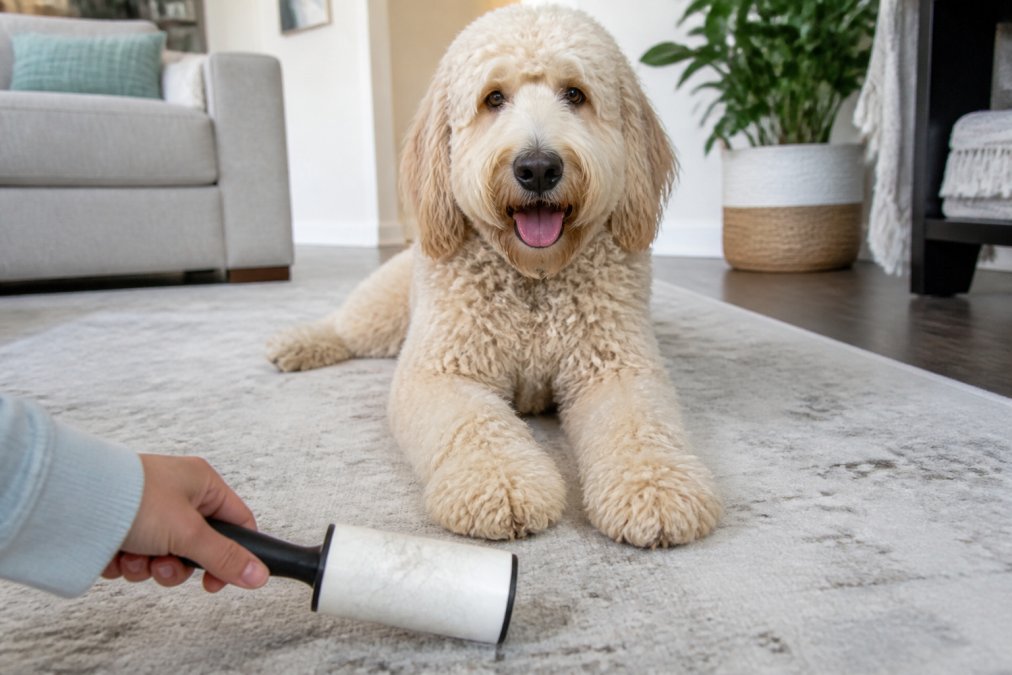
Coat texture is the most visible predictor of shedding volume. Curly coats, resembling the Poodle parent, grow continuously and shed minimally. Wavy coats shed lightly but consistently. Straight coats, taking after the Golden Retriever parent, shed the most and follow a seasonal cycle.
A straight-coated doodle, sometimes called flat-coated, will blow its coat twice a year, much like a Retriever, a shock for owners who expected a non-shedding dog based on the "doodle" label alone. When evaluating puppies, coat texture is a functional indicator of how much hair you will manage for the next decade.
Furnishings and the Puppy Coat Transition
Furnishings refer to the longer facial hair that gives Goldendoodles their beard and eyebrows. Controlled by a specific gene, their presence or absence tells you about the dog's coat genetics: a furnished doodle carries the marker for a low-shedding coat, while an unfurnished doodle with a smooth face like a Retriever is far more likely to shed heavily.
The puppy coat transition adds complexity. Most puppies are born with a soft, fluffy coat that sheds very little. Around six to twelve months, this is replaced by the adult coat, revealing the true shedding nature. A puppy that seemed low-shedding may develop a wavier or straighter adult coat that sheds more than expected.
How to Groom a Goldendoodle to Prevent Matting
Grooming is not just about aesthetics; it is the primary ongoing cost and time commitment that offsets the benefit of a low-shedding coat. While a Goldendoodle may not deposit hair on your floors, that hair becomes trapped in the curls. Without a rigorous routine, dead hair mats against the skin, causing painful tension, skin infections, and emergency shave-downs.
The Real Cost of a Low-Shedding Coat
The financial commitment is often underestimated. A full professional groom every six to eight weeks is standard. The average cost for a medium-sized Goldendoodle ranges from $90 to $150 per session, translating to an annual budget of roughly $600 to $1,000. This recurring, non-negotiable expense should be factored into your decision before bringing a puppy home.
The Essential Home Toolkit and Technique
Professional grooms are only half the battle. The other half falls on you and requires specific tools: a high-quality slicker brush and a stainless steel greyhound comb.
- Slicker Brush: Use this to remove loose hair and detangle the topcoat. Look for one with bent, fine wire pins that flex to avoid scratching the skin.
- Greyhound Comb: This is your secret weapon against matting. The long, widely spaced teeth on one end and tightly spaced teeth on the other allow you to check for mats at the skin level that the slicker brush might miss.
Master the line brushing technique: part the hair down to the skin with a comb and brush small, one-inch sections outward from the part, working systematically from head to tail. This is the only way to prevent mats from forming silently at the skin line.
High-Friction Zones and the 'Doodle Knot'
Mats form in predictable high-friction areas. Pay special attention to:
- Behind the ears: The friction of the ears rubbing against the neck creates tangles quickly.
- Under the collar: The constant pressure and movement of the collar mat the hair.
- The armpits (axillae): The rubbing of the legs against the body is a prime matting zone.
- The sanitary area: Under the tail and around the genitals, where urine and feces can cause severe matting.
A common pattern is the 'doodle knot', a dense mat behind the ear, often unnoticed until it has tightened against the skin. If a mat is too tight to brush out, do not cut it out with scissors; you risk severe injury. A professional groomer will need to shave it out, leaving a bald patch that takes months to regrow.
The Bathing and Drying Sequence
Bathing is critical, but doing it wrong can make matting worse. The correct sequence is to brush thoroughly before the bath to remove loose hair and tangles; wetting a matted coat tightens tangles and makes them nearly impossible to remove.
After shampooing, conditioning is non-negotiable; it adds slip to the hair, making it easier to brush. The most important step is drying: do not let a curly coat air-dry, as tightening curls pull small tangles into dense mats. Use a high-velocity dryer on low heat to blow the hair out straight while brushing, the same technique professional groomers use.
The Cost-Benefit of the Low-Shedding Trade-Off
This grooming burden is the direct trade-off for a low-shedding lifestyle. A Golden Retriever sheds constantly but requires far less brushing and professional grooming. A curly-coated Goldendoodle requires hours of your time each week and a significant annual financial outlay. The 'low-shedding' trait is not low-maintenance; it redirects the hair from your floor to your brush and groomer's table.
Visual Guide: Spotting a Low-Shedding Puppy Early
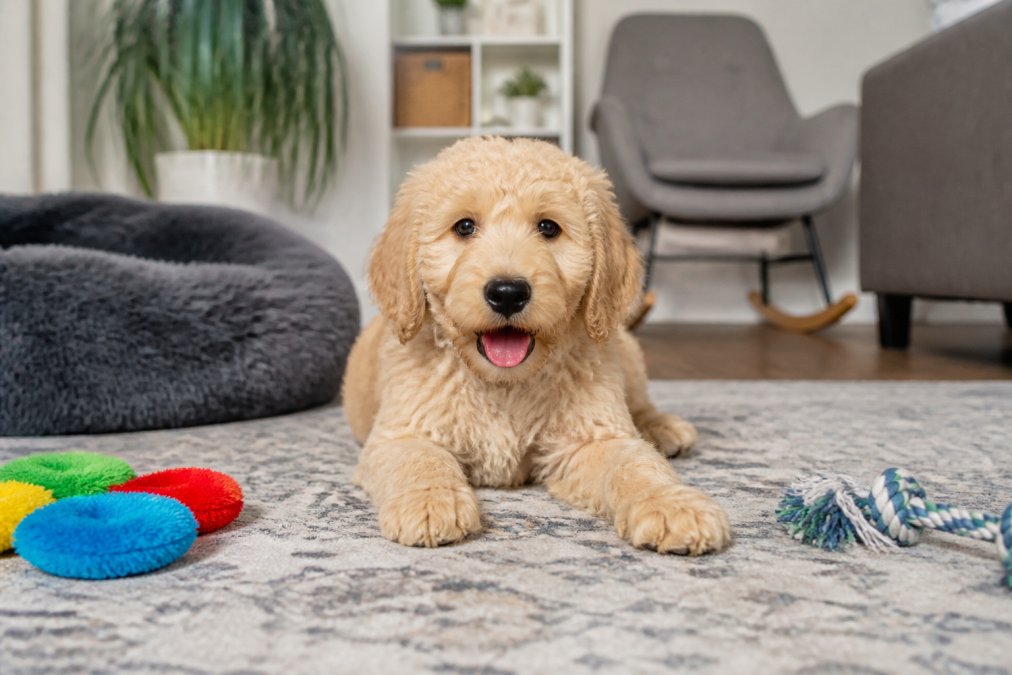
Identifying a low-shedding puppy requires looking beyond the fluff. The first indicator is coat texture: a puppy with tight, curly hair that feels dense and woolly is more likely to be a low shedder than one with soft, straight, or wispy hair. A curly coat should feel springy and resilient.
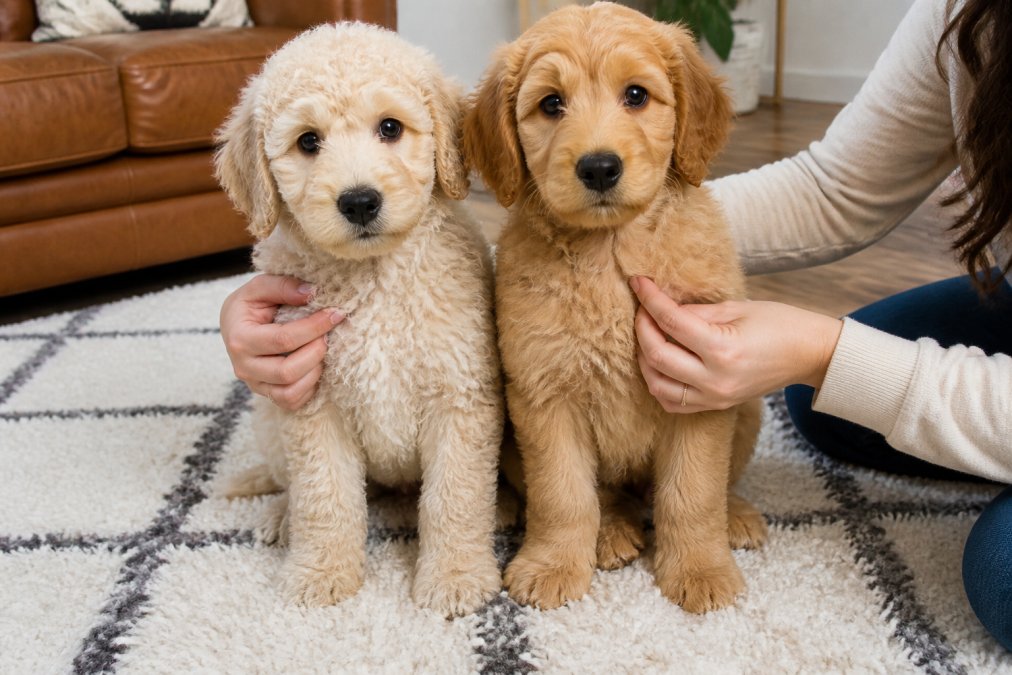
The second indicator is facial structure. A puppy with obvious furnishings, a beard and eyebrows, carries the genetic marker for the low-shedding coat type. A puppy with a smooth, clean face and short hair around the muzzle is likely unfurnished and will probably shed more as an adult.
The third indicator is the parents. Responsible breeders should show you the mother and, ideally, provide information on the stud. Observing the mother's coat and shedding habits previews what your puppy will look like as an adult. If the mother has a straight coat and sheds seasonally, your puppy has a higher chance of doing the same.
Managing Shedding and Allergies at Home
Even with a low-shedding Goldendoodle, you need a strategy for managing allergens. The most effective approach is a no-bedroom policy, high-efficiency particulate air (HEPA) filters, and regular vacuuming with a pet-specific attachment. These steps reduce airborne dander.
Bathing frequency also plays a role. Bathing every three to four weeks with a gentle, dog-safe shampoo washes away loose hair and dander. Over-bathing strips natural oils and can lead to dry, itchy skin, which increases dander production, so consistency matters more than frequency.
Seasonal shedding affects even low-shedding doodles. While a curly-coated F1B may not blow its coat, it will still shed slightly more during spring and fall as daylight hours change. Increasing brushing frequency during these transitions keeps loose hair under control and minimizes allergens.
Conclusion: Is a Goldendoodle Right for You?
Goldendoodles can be a wonderful fit for many families, but they are not a one-size-fits-all solution for shedding. The honest answer is that it depends on the generation, coat type, and your willingness to maintain a rigorous grooming schedule. For the highest probability of a low-shedding dog, seek out an F1B generation with a curly coat and confirmed furnishings.
For families navigating allergies, the decision requires more than just picking a doodle. You need to evaluate your sensitivity, spend time with the specific dog, and commit to the home management strategies that reduce dander. A Goldendoodle with a curly coat is often a better choice for mild allergy sufferers than many other breeds, but the asthma and allergy guidance from the American Lung Association emphasizes that individual reactions vary and recommends consulting an allergist before bringing a pet home.
When you choose a breeder, transparency about coat genetics and shedding expectations matters. At BLUE RIDGE DOODLES, we focus on breeding practices that prioritize health and temperament, and we encourage families to ask the questions that matter for their situation. Understanding the realities of shedding ensures you are prepared for the commitment ahead.
Frequently Asked Questions
Why is my Goldendoodle shedding more than expected?
Several factors can cause more shedding than expected. A Goldendoodle could be an F1 generation (50% Poodle, 50% Golden Retriever) with a straighter coat that sheds more. Also, puppies go through a coat transition around 6 to 12 months. If your dog has a double coat or lacks furnishings, expect more shedding. Seasonal changes can also increase hair loss. If you need a truly low-shedding dog, an F1B generation with a curly or wavy coat is your best bet.
What is the difference between F1 and F1B Goldendoodles for shedding?
The generation directly impacts shedding. An F1 Goldendoodle is a first-generation cross between a Poodle and a Golden Retriever, resulting in a 50/50 mix that often has a wavy coat and may shed moderately. An F1B Goldendoodle is bred back to a Poodle, making it 75% Poodle and 25% Retriever. This higher Poodle percentage produces a curlier coat that is much closer to non-shedding, making F1B a preferred choice for allergy sufferers.
Are Goldendoodles truly hypoallergenic?
No dog is 100% hypoallergenic. Goldendoodles produce less dander and shed less hair, which are the primary carriers of allergens, but they still produce some. This can make them a good fit for people with mild allergies, but it is not a guarantee. Before bringing a puppy home, spend time with the specific dog to see how you react. Grooming and regular bathing can further reduce allergens in your environment.
How can I tell if a Goldendoodle puppy will be low-shedding?
Look at the puppy's coat texture and genetics. Puppies with a curly or wavy coat are more likely to be low-shedding than those with a straight, flat coat. Ask the breeder about the parent generations, specifically if the puppy is an F1B or later backcross, which increases the odds of a non-shedding coat. A reputable breeder can also tell you if the puppy has furnishings, the facial hair that is a marker for the low-shedding coat gene.
Bringing a Goldendoodle into your home is a long-term commitment that goes far beyond the puppy stage. Matching your lifestyle and allergy needs with the right generation and coat type is the most important step you can take. BLUE RIDGE DOODLES pairs each family with a puppy suited to their needs, backed by over 18 years of breeding experience and a two-year limited health warranty for peace of mind. Start your application today and find a companion that fits your family's life.