 ultimate-guide
Buy a Healthy Socialized Goldendoodle Puppy
Table of Contents
- What Makes a Healthy Socialized Goldendoodle Puppy
- Goldendoodle Health Testing Requirements You Should Know
- Understanding the Goldendoodle Puppy Socialization Timeline
- Questions to Ask a Goldendoodle Breeder Before Buying
- Red Flags That Signal an Unethical Goldendoodle Breeder
- Your Veterinary Checklist After Bringing Your Puppy Home
- Post-Adoption Socialization Roadmap for Your Goldendoodle
- Frequently Asked Questions
Last Updated: September 3, 2026
What Makes a Healthy Socialized Goldendoodle Puppy
A healthy socialized goldendoodle puppy combines sound genetics, early environmental exposure, and foundational training into a confident, well-adjusted companion. The difference shows quickly: a well-socialized puppy introduced to different people, sounds, environments, and experiences during its critical developmental window tends to be calmer, more confident, and far less likely to develop fear-based behaviors later.

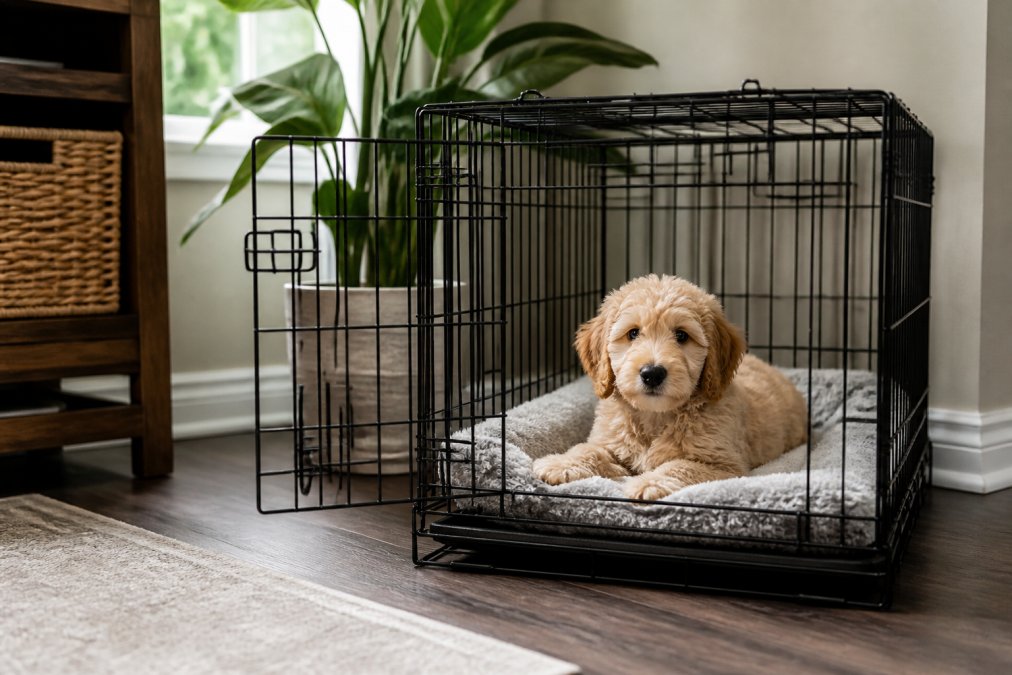
At Blue Ridge Doodles, we prioritize this window by exposing puppies to household activities, different surfaces, and gentle handling before they leave our care. Each puppy receives three weeks of crate training, which builds confidence and establishes healthy routines.
A healthy puppy also means genetic health screening on both parent dogs. Hip and elbow clearances reduce the likelihood of costly joint issues. Genetic testing for conditions common in Poodles and Golden Retrievers gives you transparency about what you're bringing home.
Goldendoodle Health Testing Requirements You Should Know
Responsible goldendoodle breeders conduct genetic health testing on parent dogs to screen for hereditary conditions. Hip dysplasia and elbow dysplasia are orthopedic issues that can develop as puppies age (ofa.org). Testing parent dogs through the Orthopedic Foundation for Animals (OFA) provides objective scores that indicate whether breeding is appropriate.
Poodles and Golden Retrievers can carry eye conditions like progressive retinal atrophy (PRA), which leads to vision loss. A veterinary ophthalmologist examination, documented through the Canine Eye Registration Foundation (CERF), screens for these issues before breeding occurs.
Cardiac screening matters too. A board-certified veterinary cardiologist can perform echocardiograms to assess heart health before breeding decisions are made (acvim.org).
When evaluating a breeder, ask for documentation of these specific tests: OFA hip and elbow scores, CERF eye clearance, and cardiac evaluation results. A breeder who can't produce these documents either hasn't tested or isn't willing to share results.
Understanding the Goldendoodle Puppy Socialization Timeline
The socialization window for puppies is narrow and critical. Between three and sixteen weeks of age, puppies are most receptive to new experiences (avsab.org). After sixteen weeks, socialization becomes significantly harder because puppies have already formed impressions about what's safe and what's threatening.
During weeks three through five, puppies should be exposed to different surfaces, household sounds, and different people in calm, positive contexts. Weeks six through twelve are when handling becomes crucial. Puppies should be touched on their paws, ears, and mouth to prevent fear-based reactions during grooming and vet visits.
By week twelve, puppies should have experienced car rides, different environments, and varied social interactions. Formal training begins in earnest with crate training, housebreaking, and basic commands. The period from twelve to sixteen weeks solidifies these early experiences before puppies enter a secondary fear period where new experiences can trigger anxiety more easily.
Questions to Ask a Goldendoodle Breeder Before Buying
Before committing to a healthy socialized goldendoodle puppy, ask specific questions that separate responsible breeders from those cutting corners.
Start with health testing. Ask for documentation of hip and elbow clearances on both parents and whether genetic testing for eye conditions and cardiac issues has been completed. Ask about the puppy's early environment: where do puppies spend their first weeks, and how many people interact with them?
Ask about the breeder's health guarantee and what it covers. A two-year limited health warranty shows confidence in breeding practices. Ask whether the breeder provides ongoing support and will answer questions after you bring the puppy home.
Ask about the puppy's training and vaccinations. Has the puppy received veterinary care and vaccinations? What training has been started? Ask about the adoption process and whether they screen families, as breeders who carefully place puppies care about matches.
Red Flags That Signal an Unethical Goldendoodle Breeder
A breeder who can't or won't provide health testing documentation is the clearest red flag. Responsible breeders test because they want to reduce hereditary problems.
Breeders with multiple litters available at once or puppies ready immediately often aren't providing adequate socialization. A breeder who doesn't ask you questions isn't invested in the puppy's success. Refusal to let you visit or meet the parents suggests the operation isn't something they're proud of.
Prices significantly lower than other breeders often correlate with lower standards. A breeder with no references or testimonials, or who discourages you from contacting previous customers, is avoiding accountability.
Your Veterinary Checklist After Bringing Your Puppy Home
Schedule a vet appointment within the first week of bringing your puppy home. Bring all health records and vaccination documentation from the breeder. Your vet will review these and assess whether the puppy needs additional vaccines or treatments.
During the exam, your vet will check the puppy's overall body condition, listen to the heart and lungs, and palpate the abdomen. They'll examine the eyes, ears, and mouth and assess the puppy's gait to screen for orthopedic problems.
Ask your vet about a parasite prevention plan and the vaccination schedule. Discuss nutrition and whether the breeder's recommended food is appropriate. Ask about dental care and common behavioral issues to help you distinguish between normal puppy development and concerns that warrant attention.
Post-Adoption Socialization Roadmap for Your Goldendoodle
Bringing home a healthy socialized goldendoodle puppy doesn't mean socialization stops; it intensifies. Your job is to continue building on the foundation the breeder established.
Weeks one through four at home should focus on establishing routine and bonding. Consistency matters enormously. Introduce new people gradually in your home where the puppy feels safe. Let the puppy approach people rather than forcing interaction.
Weeks four through eight expand the puppy's world. Take the puppy to different environments, parks, and friends' houses. Start formal training during this period. Puppy kindergarten classes provide controlled socialization with other puppies and professional guidance.
Handling and grooming desensitization should continue. Touch the puppy's paws, ears, and mouth regularly. Practice bathing and brushing to prevent anxiety during grooming appointments and vet visits.
Months three through six focus on deepening training and expanding social circles. Your puppy should be comfortable with a wider variety of people, dogs, and environments. Continue positive reinforcement training and introduce the puppy to different surfaces and obstacles.
Bringing home a healthy socialized goldendoodle puppy is a significant decision that deserves careful research and planning. The choices you make before purchase, selecting an ethical breeder, understanding health testing, and recognizing red flags, directly impact your puppy's quality of life and your family's experience.
Blue Ridge Doodles brings over 18 years of breeding experience to every puppy, with a commitment to socialization, health screening, and family-raised environments. Each puppy receives three weeks of crate training, microchipping, two rounds of booster vaccines, and a two-year limited health warranty.
Ready to find your family's next companion? Submit an application to Blue Ridge Doodles and discover why families across the region trust us to raise their puppies with care, transparency, and genuine commitment to their wellbeing.
Frequently Asked Questions
What health tests should a Goldendoodle breeder perform?
Responsible breeders perform hip and elbow clearances, eye exams, and genetic testing on parent dogs. These tests screen for common issues in both Golden Retrievers and Poodles. Ask breeders for documentation from the Orthopedic Foundation for Animals (OFA) or similar registries. A breeder who skips health testing is cutting corners that will cost you later in veterinary bills and heartache.
Why is early socialization critical for Goldendoodle puppies?
Puppies have a critical socialization window between 3 and 14 weeks of age. During this period, positive exposure to people, environments, and experiences shapes their temperament for life. A well-socialized Goldendoodle puppy is calmer, more confident, and less likely to develop fear or aggression. Breeders who practice early neurological stimulation and controlled introductions give puppies a foundation that's difficult to replicate later.
How can I tell if a Goldendoodle breeder is reputable?
Reputable breeders provide health guarantees, welcome home visits, ask detailed questions about your lifestyle, and maintain ongoing relationships with puppy buyers. They breed for temperament and health, not just profit. Red flags include refusal to share health testing results, pressure to buy quickly, no written contract, or unwillingness to take a puppy back if problems arise. Trust your instincts, legitimate breeders are transparent and patient.
What's the difference between F1 and F1B Goldendoodles?
F1 Goldendoodles are 50% Golden Retriever and 50% Poodle, offering hybrid vigor and unpredictable coat types. F1B Goldendoodles are 75% Poodle and 25% Golden Retriever, typically more allergy-friendly with curlier coats. If coat shedding is critical for someone with allergies, F1B puppies are more likely to meet that need, though no dog is truly hypoallergenic. Ask breeders about the coat type of the parents and what to expect.