 ultimate-guide
Is a Goldendoodle Right for Me? A 2026 Fit Guide
Table of Contents
- Goldendoodle Temperament: What to Expect Daily
- Are Goldendoodles Good for Families with Kids?
- Goldendoodle Grooming Requirements: Coat Reality Check
- Goldendoodle Exercise Needs: Matching Your Activity Level
- Training, Socialization, and Behavioral Challenges
- Health, Lifespan, and Genetic Testing Considerations
- F1 vs F1b vs F2: Choosing the Right Generation
- Making the Goldendoodle Decision: A Final Fit Check
- Frequently Asked Questions
Last Updated: September 5, 2026
Deciding whether a Goldendoodle fits your life is less about the breed's popularity and more about an honest look at your daily routine, your home, and your tolerance for fur and energy. This guide from BLUE RIDGE DOODLES breaks down temperament, grooming, exercise, and health so you can move past the cute puppy photos and make a clear-eyed choice. A Goldendoodle is a cross between a Golden Retriever and a Poodle, bred to combine the Poodle's intelligence and lower-shedding coat with the Golden's gentle, affectionate nature. We'll help you determine if the goldendoodle right match for your family is actually the one you're picturing, covering everything from coat genetics to daily energy demands.
Goldendoodle Temperament: What to Expect Daily
Goldendoodles are widely described as affectionate, intelligent, and social companion animals that thrive on human interaction (akc.org). In practice, this means a dog that wants to be part of every room you're in.
The breed's canine intelligence makes training straightforward, but that same smart streak means they need mental stimulation to avoid boredom. A Goldendoodle left alone for long stretches without engagement can develop separation anxiety or destructive habits like chewing baseboards.
Are Goldendoodles Good for Families with Kids?
Goldendoodles are generally excellent family dogs because their Golden Retriever lineage brings a patient, forgiving nature around children. Their playful disposition pairs well with kids who want an active playmate.
That said, supervision still matters, especially with toddlers. A young puppy may be overly excitable and accidentally knock over a small child during play. Training consistency from day one teaches impulse control, and a well-socialized Doodle learns to be gentle around little ones.
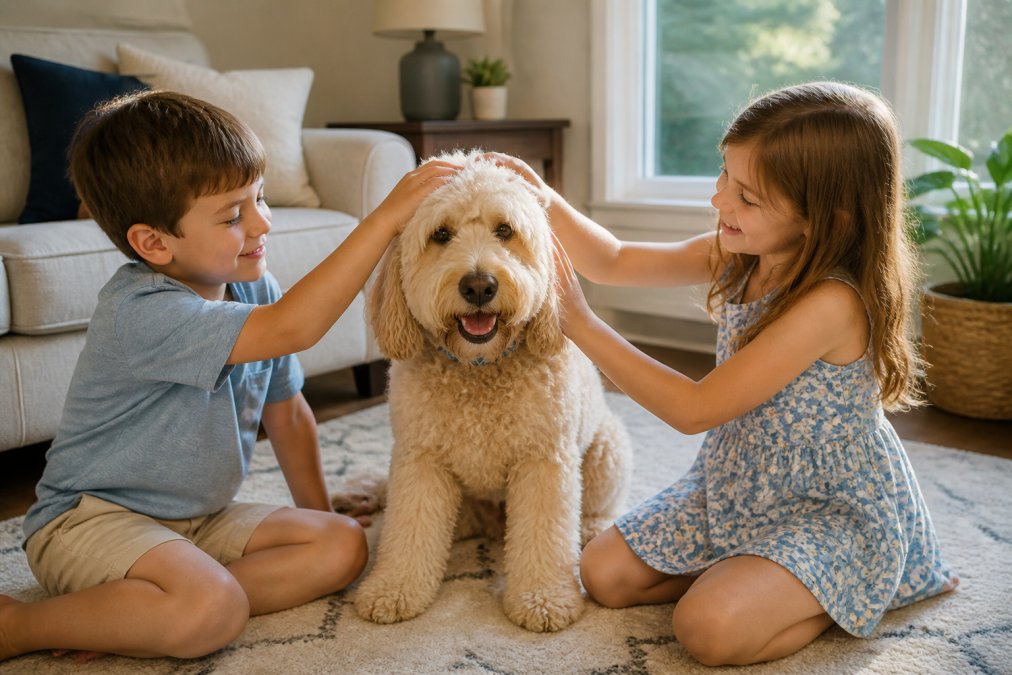
For households with young kids and a busy schedule, the key is matching the dog's energy with structured outlets. A Doodle that gets daily exercise and clear boundaries adapts well to family chaos; one that doesn't becomes over-excited and harder to manage.
Goldendoodle Grooming Requirements: Coat Reality Check
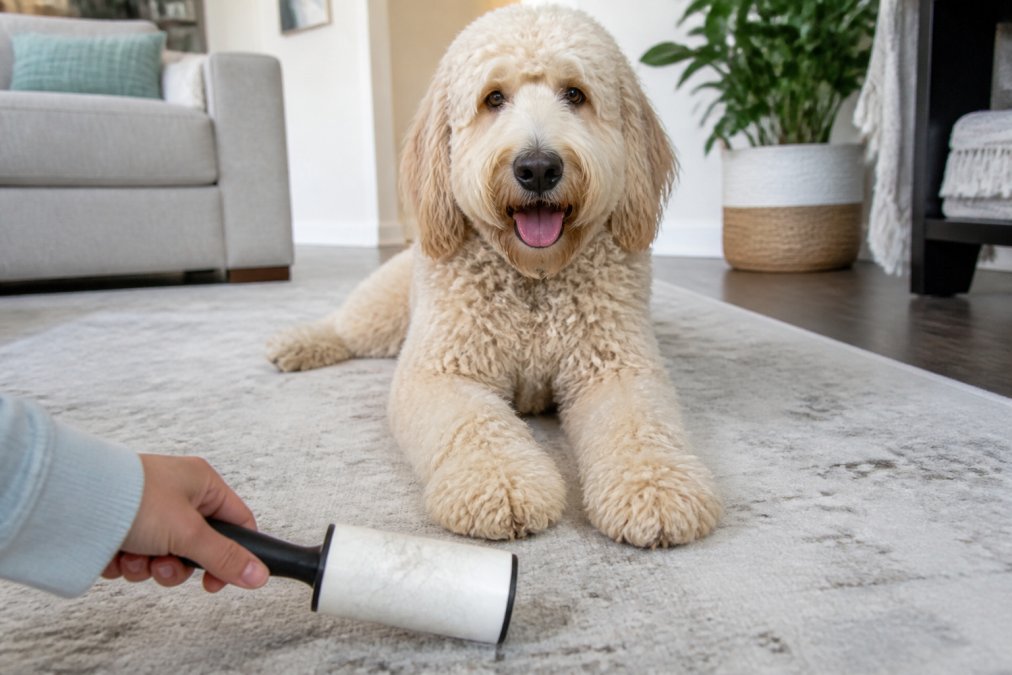
Goldendoodle grooming is often the most underestimated aspect of ownership. The promise of a "hypoallergenic" dog is a simplification; the reality is a continuously growing coat that demands a strict, lifelong maintenance schedule.
The Mechanics of a Doodle Coat
The coat's behavior is determined by genetics, not just the F1 or F1b label. The Poodle's coat grows continuously and has a hair-growth cycle that lasts much longer than a Golden Retriever's (peer-reviewed research). This means shed hairs don't fall out; they get trapped in the surrounding coat, leading to matting if not removed through brushing.
A Realistic Grooming Schedule and Budget
Here is a breakdown of what a typical week and month looks like for a Goldendoodle owner:
- Daily (5-10 minutes): A quick line-brushing session with a slicker brush and metal comb, focusing on high-friction areas like behind the ears, under the collar, and in the armpits. This prevents small tangles from becoming painful mats.
- Weekly (30-45 minutes): A more thorough, full-body brushing session to remove any loose hair and debris. This is also a good time to check for burrs, ticks, or any skin irritations.
- Every 3-4 Weeks: A bath with a high-quality dog shampoo and conditioner. This is crucial for skin health and helps keep the coat clean and easier to manage. Plan for a thorough drying, as leaving the coat damp can worsen matting.
- Every 6-8 Weeks: A professional grooming appointment. The cost for this varies significantly by region and groomer, but you should budget between $90 and $150 per session. This is a non-negotiable expense for most owners.
The Consequences of Skipping Grooming
When brushing is skipped, the undercoat and shed hairs begin to felt together. This creates a mat that pulls on the dog's skin, causing pain, bruising, and even hematomas. In severe cases, the only solution is a full shave-down, which can be traumatic for the dog and leaves the coat vulnerable to sunburn and skin irritation. A shave-down also often ruins the coat's texture, and it can take over a year to grow back properly. This is not a cosmetic issue; it's a health and welfare issue.
Grooming as a Bonding Experience
While the schedule is demanding, it's also an opportunity. Regular handling, brushing, and ear cleaning help your dog become comfortable with being touched, which makes vet visits and other handling far less stressful. The key is to start this routine from day one, making it a positive experience with treats and praise.
Goldendoodle Exercise Needs: Matching Your Activity Level
Goldendoodle exercise needs sit firmly in the moderate-to-high range, but the real question isn't just about minutes per day, it's about the type of energy you can provide and how it fits into your specific life. A Goldendoodle is not a dog that will be satisfied with a quick bathroom break. Let's move beyond generic advice and look at two common lifestyles to see what a day might actually look like.
Scenario 1: The Working Professional (Away 8-10 Hours)
This is the most challenging scenario for a Goldendoodle. They are highly social and prone to separation anxiety, so a standard workday is a significant hurdle.
- 6:30 AM: A 45-minute brisk walk or jog. This isn't a leisurely stroll; it's a chance for your dog to burn off energy and have a good bathroom break.
- 7:15 AM: A 15-minute training session or puzzle toy activity to engage their mind before you leave.
- 12:00 PM: This is the critical gap. A dog walker must come for a 30-45 minute visit. This is a daily, non-negotiable expense, typically costing $20-$30 per day. Without this, you are setting your dog up for destructive behaviors born from boredom and anxiety.
- 6:30 PM: Another 45-minute walk or a high-energy game of fetch in a fenced area.
- 8:00 PM: A short, calm training session or a chew toy to wind down.
The Verdict: If you cannot commit to a daily dog walker or doggy daycare, this scenario is a recipe for a stressed-out dog and a damaged apartment. A Goldendoodle's need for companionship is not a preference; it's a core part of their temperament.
Scenario 2: The Stay-at-Home Parent or Remote Worker
This lifestyle offers the constant companionship a Goldendoodle craves, but it comes with its own challenges. You must be disciplined about providing structured activity, not just passive presence.
- 8:00 AM: A 30-minute walk after the morning rush. This helps your dog start the day calmly.
- 10:00 AM: 15 minutes of interactive play in the yard or a game of tug-of-war in the living room.
- 1:00 PM: A puzzle toy filled with treats or a stuffed Kong to provide mental stimulation while you work or tend to other tasks.
- 4:00 PM: A 30-minute walk or a trip to a dog park for off-leash socialization.
- 7:00 PM: A family walk or a game of fetch. This is a great way to involve the whole family in the dog's exercise routine.
The Verdict: This scenario is much more aligned with a Goldendoodle's needs. The key is to ensure the dog learns to settle and be calm during your work hours, which requires consistent training and a predictable routine. Without it, you'll have a dog that demands attention every time you sit down.
The Real Test: Consistency Over Intensity
A Goldendoodle is adaptable. They can live in an apartment or a house with a yard, but they are not adaptable about consistency. They need their exercise every single day, regardless of weather, your mood, or your schedule. Missing a day isn't a minor issue; it's a direct cause of behavioral problems like excessive barking, chewing, and digging. Before you commit, ask yourself: can I provide this level of structured activity, every day, for the next 10-15 years?
Training, Socialization, and Behavioral Challenges
Training a Goldendoodle is generally rewarding because the breed's intelligence and eagerness to please respond well to positive reinforcement. However, that intelligence cuts both ways: an under-stimulated Doodle invents its own entertainment, which often involves your shoes or furniture.
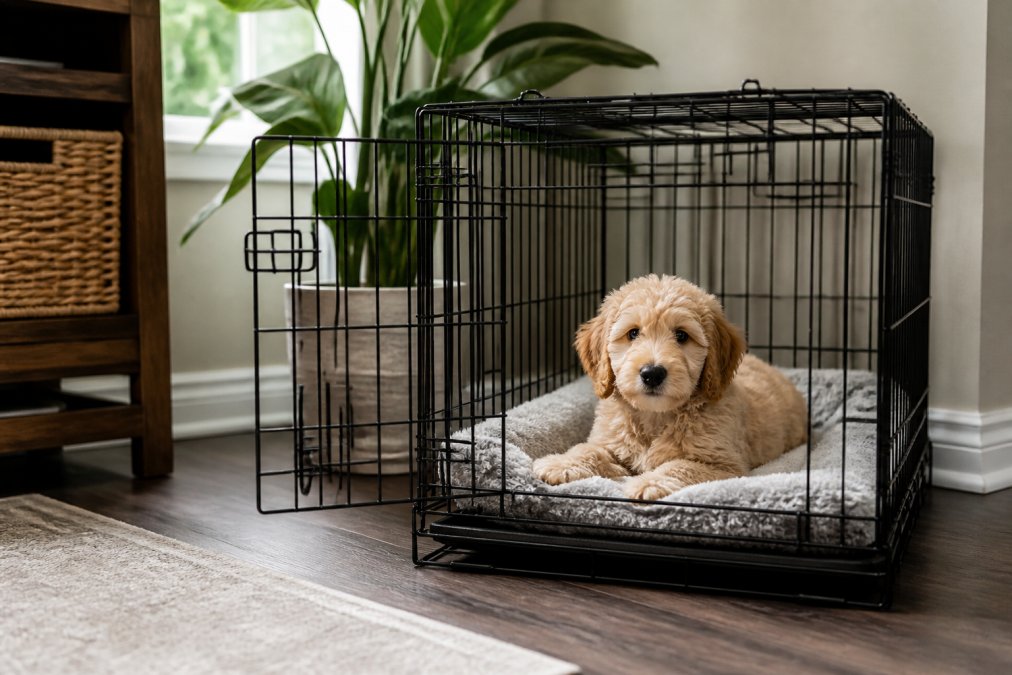
Early socialization is non-negotiable. Exposing a puppy to various people, dogs, and environments during the first months builds a confident adult. Behavioral traits like over-excitability, jumping on guests, and pulling on the leash respond to consistent training rather than punishment. Crate training, which many breeders start before puppies go home, provides a secure base and eases the house-training process.
Health, Lifespan, and Genetic Testing Considerations
The Goldendoodle's lifespan typically ranges from 10 to 15 years, with responsible breeding playing a major role in overall health outcomes (vcahospitals.com). Because they are a crossbreed, Doodles can inherit health conditions from either parent breed, including hip dysplasia, certain eye disorders, and heart conditions.
Genetic health testing of parent dogs reduces, though never eliminates, the risk of passing on hereditary conditions. Reputable breeders screen their breeding stock and provide health certificates, and prospective owners should ask for documentation. Veterinary care costs accumulate over the dog's life, so budgeting for routine checkups and potential emergencies matters as much as the initial purchase price.
A two-year limited health warranty, offered by some breeders, provides added peace of mind that the puppy is protected against specific genetic conditions after you bring it home. Ask exactly what the warranty covers and what documentation you need to maintain it.
F1 vs F1b vs F2: Choosing the Right Generation
Goldendoodle generations describe the ratio of Golden Retriever to Poodle ancestry, and this matters for coat type and shedding expectations. An F1 Goldendoodle is a 50-50 cross of a Golden Retriever and a Poodle. An F1b is an F1 Goldendoodle bred back to a Poodle, resulting in a coat that is typically curlier and lower-shedding. An F2 is the result of breeding two F1 Goldendoodles together.
For families where allergies are a genuine concern, the F1b generation is often the safer choice because the higher Poodle percentage produces a coat closer to the hypoallergenic end of the spectrum. F1 coats vary more widely, with some individuals shedding noticeably. Beyond coat, generation has less impact on temperament.
| Generation | Poodle Percentage | Shedding Likelihood | Best For |
|---|---|---|---|
| F1 | 50% | Moderate to noticeable | Active families, first-time owners |
| F1b | 75% | Low | Allergy sufferers, clean homes |
| F2 | 50-75% | Varies | Buyers open to coat unpredictability |
Talk with your breeder about which generation their puppies come from and ask to meet the parent dogs. Observing the mother's coat and temperament gives you a reliable preview of what your puppy will grow into.
Making the Goldendoodle Decision: A Final Fit Check
A Goldendoodle is a wonderful companion for the right household, but the decision demands honesty about your time, energy, and budget. The breed offers an affectionate, intelligent, and versatile family dog, but it also requires consistent grooming, daily exercise, and ongoing training commitment. If your schedule allows for regular walks, your budget covers professional grooming, and your home has space for a medium-to-large dog, a Goldendoodle may be the right fit.
For those ready to move forward, choosing a breeder who prioritizes health testing, early socialization, and transparency makes a measurable difference in your puppy's start. BLUE RIDGE DOODLES has spent over 18 years raising puppies in a family environment, with each one crate-trained, vet-checked, and microchipped before joining your home. Their two-year limited health warranty and two rounds of booster vaccines offer protection during the critical first months. If you're ready to find a gentle, lower-shedding companion, getting started with BLUE RIDGE DOODLES begins with an application to discuss whether one of their puppies matches your family's lifestyle.
Frequently Asked Questions
What is the biggest downside of having a Goldendoodle?
The biggest downside is the grooming commitment. Goldendoodles have continuously growing coats that mat easily if neglected. Plan for professional grooming every 6 to 8 weeks and daily brushing at home. They also need more daily exercise and mental stimulation than many expect, so a sedentary household may struggle with a bored, destructive dog.
Do Goldendoodles choose one person?
Goldendoodles are typically affectionate with the whole family, but they often form a particularly strong bond with one primary caregiver. This is normal. Early socialization with all family members helps prevent over-attachment. If you want a dog that spreads the affection evenly, involve everyone in feeding, training, and playtime from day one.
How much exercise does a Goldendoodle need daily?
Most adult Goldendoodles need about 45 to 60 minutes of exercise per day, split between walks and active play. This can include a brisk morning walk and an afternoon fetch session. Puppies need shorter, more frequent play sessions. Without this, they may develop separation anxiety or destructive chewing habits.
Are Goldendoodles considered high-maintenance dogs?
Goldendoodles are high-maintenance in grooming but moderate in other areas. Their coat requires daily brushing and regular professional trims, which costs time and money. They are also highly social and do not do well alone for long hours. If you can commit to the coat care and daily companionship, they are manageable for most families.