 ultimate-guide
Early Puppy Socialization Importance 2026
Table of Contents
- What Is Puppy Socialization and Why It Matters
- The Critical Socialization Window for Puppies
- Goldendoodle Puppy Socialization Schedule 2026
- How to Socialize a Puppy Before Vaccines
- Building Confidence Through Safe Environmental Exposure
- Puppy Socialization Checklist for Owners
- Common Mistakes That Undermine Early Socialization
- Conclusion
- Frequently Asked Questions
Last Updated: August 31, 2026
What Is Puppy Socialization and Why It Matters
Puppy socialization is the process of exposing young dogs to a wide variety of people, animals, environments, and stimuli during their critical developmental period. It's not just about making your puppy friendly, it's about building the neurological foundation for a confident, well-adjusted adult dog capable of handling real-world unpredictability.
Training teaches a dog what to do. Socialization teaches a dog how to feel about the world around them. At Blue Ridge Doodles, we understand that early puppy socialization is the difference between a dog that tolerates new situations and one that genuinely enjoys them.
Without intentional, structured exposure during the sensitive window when puppies are neurologically primed to accept new experiences, behavioral problems often emerge months or years later. A puppy that never encountered children during the critical period might develop fear-based reactivity toward kids at age two. A dog that didn't experience car rides early may develop motion sickness or anxiety that persists into adulthood.
Puppies have a finite window, roughly 8 to 16 weeks of age, when their brains are most receptive to new stimuli (peer-reviewed research). During this period, positive exposures create lasting neural pathways. Exposures that come later require significantly more effort to establish the same level of comfort. This is why breeders who prioritize early socialization, like Blue Ridge Doodles with over 18 years of experience raising Goldendoodles, begin this work before puppies even leave the breeding environment.
The Critical Socialization Window for Puppies
The socialization window spans roughly 8 to 16 weeks of age. During this period, a puppy's brain is in a state of heightened neuroplasticity, optimized for learning and memory formation related to new experiences.
Before 8 weeks, puppies are heavily dependent on their mother and littermates, learning canine social cues from siblings. After 16 weeks, the puppy's brain becomes progressively more cautious about novel stimuli. Experiences that would have been neutral or positive at 10 weeks may trigger fear responses at 20 weeks if the puppy hasn't been gradually acclimated.
The timing of vaccination creates a practical challenge. Puppies typically receive their first vaccine at 6-8 weeks, with boosters at 10-12 weeks and sometimes 14-16 weeks (aaha.org). During this exact socialization window, puppies are not yet fully protected against certain diseases. The tension between protecting a puppy's physical health and developing its behavioral health requires a thoughtful approach rather than complete isolation.
Within the 8-16 week window, there are two brief fear periods, around 8-11 weeks and again around 6-14 months (peer-reviewed research). During these periods, puppies are more sensitive to negative experiences. A frightening event that might roll off a puppy at 9 weeks could create lasting anxiety if it occurs during a fear period.
Goldendoodle Puppy Socialization Schedule 2026
A practical goldendoodle puppy socialization schedule 2026 needs to balance the critical window with vaccination timing and the individual puppy's readiness. Goldendoodles, being intelligent and social dogs, typically respond well to structured early exposure.
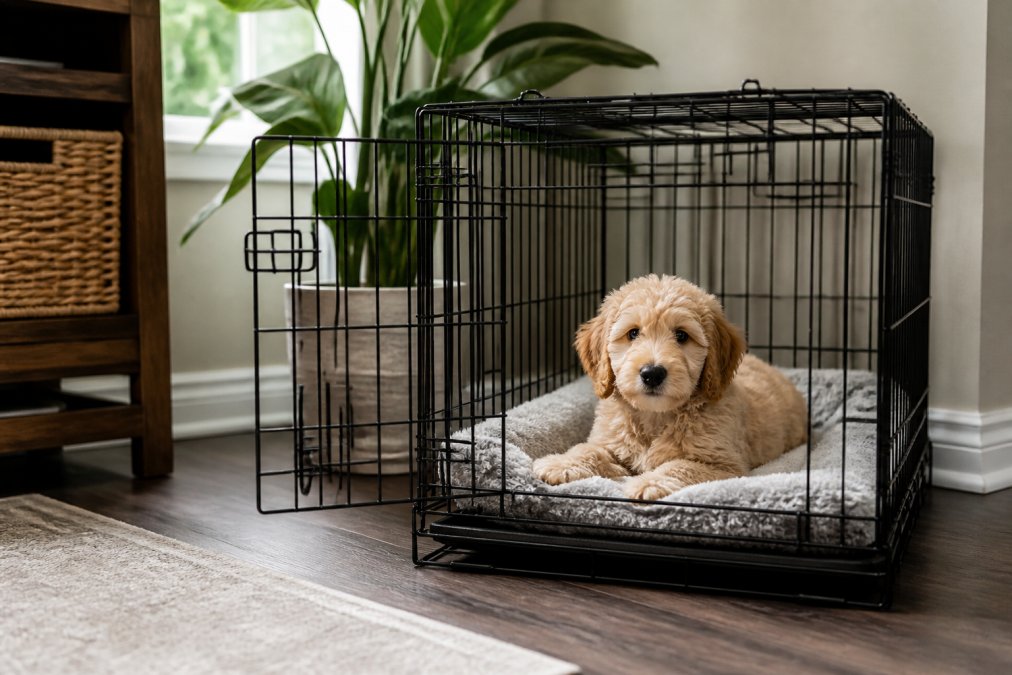
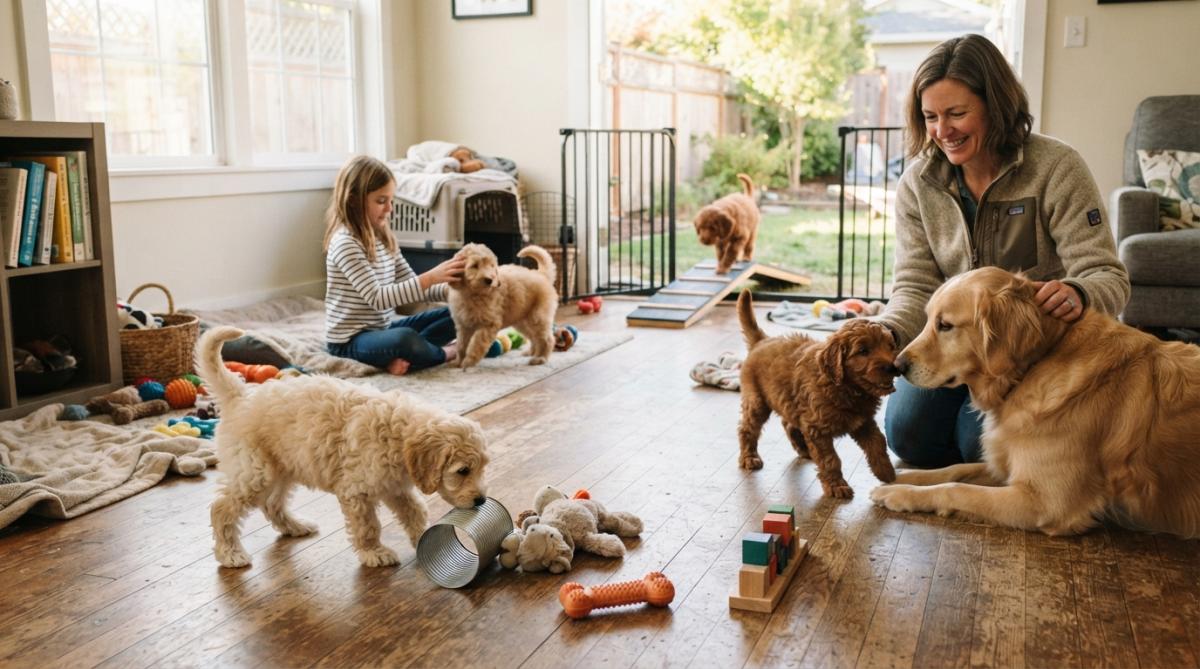
Weeks 8-10: Most puppies have received their first vaccine. Introduce the puppy to different surfaces (tile, carpet, hardwood, grass), household sounds (vacuum, blender, doorbell, washing machine), and invite friends and family to visit in a controlled setting. Handle the puppy's paws, ears, and mouth regularly to build comfort with grooming and veterinary handling. Begin crate training.
Weeks 10-12: The second vaccine is usually administered around this time. Short, controlled outdoor exposure becomes possible in low-traffic areas. Many veterinarians now recommend limited outdoor time rather than complete avoidance. The puppy can meet vaccinated dogs from trusted sources and encounter people of different ages, appearances, and presentations.
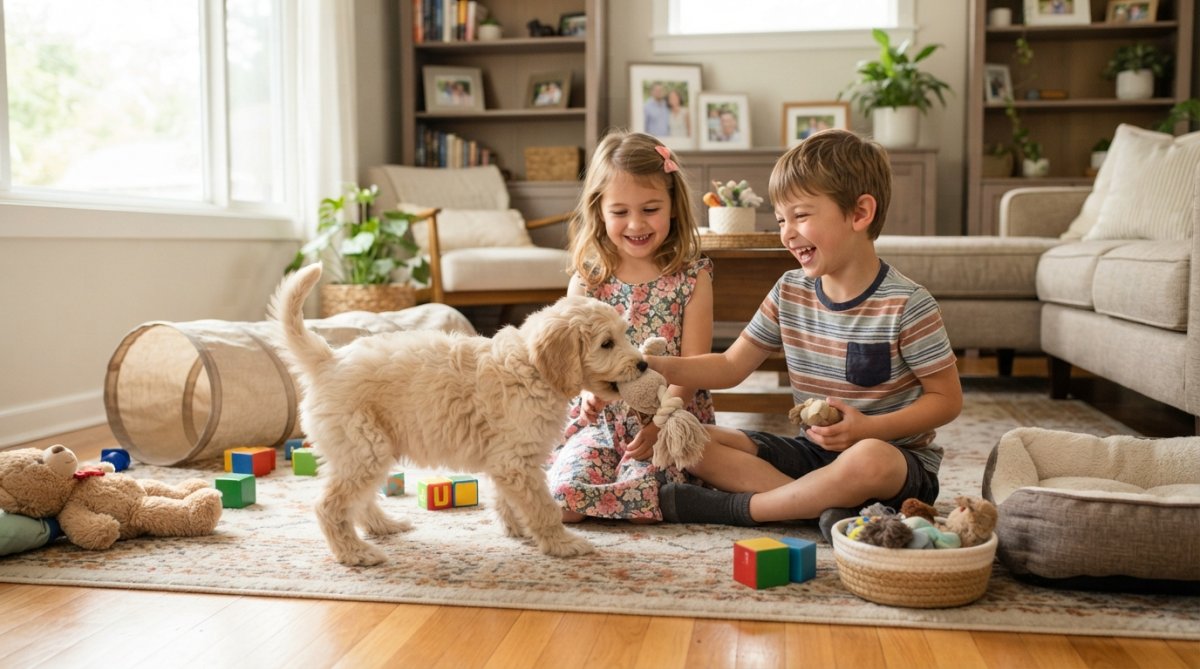
Weeks 12-16: By 12 weeks, many puppies are nearing completion of their initial vaccine series. Exposure can expand more confidently to pet-friendly stores, quiet parks, and controlled group settings. Puppy kindergarten classes, which typically require proof of vaccination, are ideal during this window.
Weeks 16+: After 16 weeks, the window is narrowing, but socialization should continue through at least 6 months and ideally throughout the first year. The puppy's confidence is building, but new experiences still matter.
How to Socialize a Puppy Before Vaccines
The question of how to socialize a puppy before vaccines deserves a practical answer rather than a blanket "wait until fully vaccinated" directive. Incomplete vaccination and the critical socialization window overlap, and waiting until 16 weeks means missing the most receptive period for learning.
Low-risk socialization strategies before full vaccination:
Start indoors and in controlled environments. Your home, friends' homes, and the homes of vaccinated dogs are lower-risk than public parks. This allows the puppy to experience new people, sounds, and environments without exposure to unknown dogs or contaminated surfaces.
Use your own fenced yard if available. A yard where unknown dogs haven't been provides safer outdoor exposure than public spaces. The puppy experiences grass, weather, and outdoor sounds without disease exposure risk.
Visit your veterinarian's office specifically for socialization visits, not just vaccines. Many clinics encourage this, allowing the puppy to become comfortable with the office, sounds, smells, and handling.
Arrange playdates with vaccinated dogs from trusted sources. Controlled one-on-one interactions are lower-risk than group settings and help the puppy learn canine social cues.
Attend puppy kindergarten classes that require vaccination proof. These are specifically designed for puppies in the socialization window with controlled, vaccinated-only settings.
Use car rides, short walks in quiet neighborhoods, and trips to pet-friendly outdoor spaces where dogs aren't allowed to roam off-leash for environmental exposure without direct contact with unknown animals.
Building Confidence Through Safe Environmental Exposure
Confidence in dogs is built through repeated, positive exposure to novel stimuli. A confident puppy has learned, through experience, that new things are usually safe and sometimes interesting.
Surfaces and textures: Puppies should experience grass, concrete, tile, gravel, sand, and other textures. Rather than forcing a puppy onto an unfamiliar surface, allow them to investigate at their own pace. Many puppies overcome surface hesitation within a few exposures if the experience is positive.
Sounds: Household appliances, traffic sounds, thunderstorms, and other auditory stimuli should be introduced gradually. Start with quieter versions and gradually increase exposure as the puppy shows comfort.

Weather and seasonal changes: Rain, wind, snow, and temperature changes are part of real life. Puppies that have experienced these during the socialization window adapt more readily.
Handling and grooming: Regular handling of the puppy's paws, ears, mouth, and body builds comfort with grooming and veterinary exams.
Vehicle travel: Short, positive car rides build comfort. Pairing car rides with positive outcomes creates positive associations.
The principle underlying all of this is desensitization and counter-conditioning. A puppy that hears a vacuum cleaner in the distance while getting treats is learning to associate the sound with positive outcomes.
Puppy Socialization Checklist for Owners
A practical checklist helps owners ensure they're covering the major areas of socialization rather than leaving gaps.
| Socialization Category | Examples | Target Timeline |
|---|---|---|
| People | Different ages, genders, appearances (hats, glasses, uniforms, beards) | By 12 weeks |
| Dogs | Vaccinated puppies and adult dogs in controlled settings | By 14 weeks |
| Environments | Home, yard, car, pet store, park, friend's house, veterinary office | By 16 weeks |
| Surfaces | Grass, concrete, tile, gravel, sand, metal grates | By 14 weeks |
| Sounds | Vacuum, doorbell, traffic, rain, household appliances | Ongoing through 6 months |
| Handling | Paws, ears, mouth, nail trimming, bathing | By 12 weeks |
| Vehicles | Car rides, short trips | By 14 weeks |
Week-by-week checklist:
Weeks 8-10:
- Puppy meets at least 5 different people in the home
- Puppy experiences household sounds (vacuum, blender, doorbell)
- Puppy walks on different indoor surfaces
- Puppy is handled regularly, paws, ears, mouth touched
- Puppy spends time in the crate
- Puppy experiences a short car ride
Weeks 10-12:
- Puppy meets people of different ages and appearances
- Puppy has limited outdoor time in a safe yard or low-traffic area
- Puppy meets a vaccinated adult dog (if available)
- Puppy experiences different outdoor sounds
- Puppy visits the veterinarian's office for a non-vaccine visit
- Puppy walks on grass and other outdoor surfaces
Weeks 12-16:
- Puppy attends puppy kindergarten or similar class
- Puppy meets multiple vaccinated dogs in controlled settings
- Puppy experiences short trips to pet-friendly outdoor spaces
- Puppy encounters various people in different settings
- Puppy experiences weather (rain, wind, temperature changes)
- Puppy is comfortable with grooming and handling
Weeks 16+:
- Continue exposure to new environments and situations
- Expand to busier environments as confidence builds
- Maintain regular positive interactions with other dogs
- Continue varying experiences throughout the first year
The goal is breadth of exposure across multiple categories, not checking every box.
Common Mistakes That Undermine Early Socialization
Understanding what goes wrong helps owners avoid pitfalls that sabotage socialization efforts.
Mistake 1: Waiting too long. Delaying socialization until the puppy is fully vaccinated means the window has largely closed. A puppy socialized at 20 weeks requires significantly more effort to achieve the same comfort level as one socialized at 10 weeks.
Mistake 2: Forcing negative experiences. Forcing a terrified puppy into a crowded park, holding a frightened puppy while strangers pet it, or insisting a puppy interact with a dog they're uncomfortable with creates fear, not confidence. Socialization should be positive or neutral, never traumatic.
Mistake 3: Relying only on puppy classes. Puppy kindergarten is valuable, but it's not sufficient on its own. Real-world exposure in different neighborhoods, with different people in different contexts, is essential.
Mistake 4: Isolating the puppy for disease prevention. Complete isolation during the socialization window often creates a behaviorally fragile dog. Risk-aware socialization is the answer, not risk-free isolation.
Mistake 5: Assuming the puppy will "grow out of it." Fear and anxiety don't typically resolve on their own. A puppy that's fearful at 12 weeks and not socialized will likely be a fearful dog at two years. Early socialization prevents these issues.
Mistake 6: Not matching exposure to the puppy's individual temperament. Some puppies are naturally bold; others are more cautious. Tailoring the approach to the individual puppy matters.
Mistake 7: Stopping socialization at 16 weeks. Behavioral development continues beyond the critical window. Socialization should continue through at least six months and ideally through the first year.
Conclusion
Early puppy socialization is the foundation for a dog's emotional resilience, confidence, and ability to navigate the world without fear or anxiety. The 8-16 week window is neurologically unique, and exposures during this period create lasting neural patterns that are difficult to change later.
At Blue Ridge Doodles, every puppy begins socialization before leaving the breeding environment. Our puppies receive three weeks of crate training, human handling, and environmental exposure as part of our commitment to raising well-adjusted dogs. When you bring home a Blue Ridge Doodles Goldendoodle, you're starting with a puppy that's already comfortable with people, handling, and new experiences.
Apply the socialization schedule, use the checklist, avoid the common mistakes, and prioritize positive experiences during the critical window. Your puppy's behavioral health for the next 12-15 years depends on the decisions you make in the next 8 weeks.
Ready to welcome a well-socialized Goldendoodle into your family? Learn more about Blue Ridge Doodles' socialization practices and available puppies and discover how our breeding philosophy prioritizes your puppy's lifelong well-being.
Frequently Asked Questions
What is the critical window for puppy socialization?
The critical socialization period for puppies is between 8 and 16 weeks of age. During this window, puppies are naturally curious and learn to accept new stimuli more readily. Positive experiences during this time shape their behavioral development and confidence for life. After 16 weeks, puppies become more cautious, making early exposure significantly more valuable for preventing fear and anxiety.
How does early socialization affect a dog's long-term behavior?
Early socialization directly influences lifelong success and behavioral health. Puppies exposed to diverse people, environments, sounds, and experiences develop stronger social relationships and canine communication skills. Well-socialized puppies are less likely to develop reactive behavior, anxiety, or aggression as adults. They adapt more easily to new situations and handle unexpected stimuli with confidence rather than fear.
Can I socialize my puppy before they are fully vaccinated?
Yes, controlled socialization before full vaccination is possible and important. Focus on low-risk environments like your home, trusted friends' homes, and puppy-specific classes where vaccination status is verified. Avoid high-traffic public areas and unknown dogs until your puppy completes their vaccination series. Consult your veterinarian about post-vaccination socialization strategies to balance health protection with developmental needs.
What should a puppy socialization checklist for owners include?
A comprehensive puppy socialization checklist should cover exposure to different people (children, strangers, people with varied appearances), environments (home, car, outdoor settings, different flooring types), sounds (traffic, vacuum, doorbell), other animals, and novel experiences. Track desensitization progress and note your puppy's reactions. Include gentle exposure to grooming, handling, and veterinary visits. A structured checklist helps prevent gaps in behavioral development and builds confidence systematically.