 ultimate-guide
Are Goldendoodles Hypoallergenic for Allergies?
Table of Contents
- What 'Hypoallergenic' Actually Means for Dogs
- The Real Source of Dog Allergies: Dander, Saliva, and Sebum
- Are Goldendoodles Hypoallergenic, Or Is That a Myth?
- F1 vs F1b Goldendoodle Coat Types and Allergy Risk
- How to Test Your Allergy Response Before Bringing a Puppy Home
- How to Manage Dog Allergies at Home With a Goldendoodle
- Pros and Cons of Goldendoodles for Allergy Sufferers
- Frequently Asked Questions
Last Updated: August 29, 2026
What 'Hypoallergenic' Actually Means for Dogs
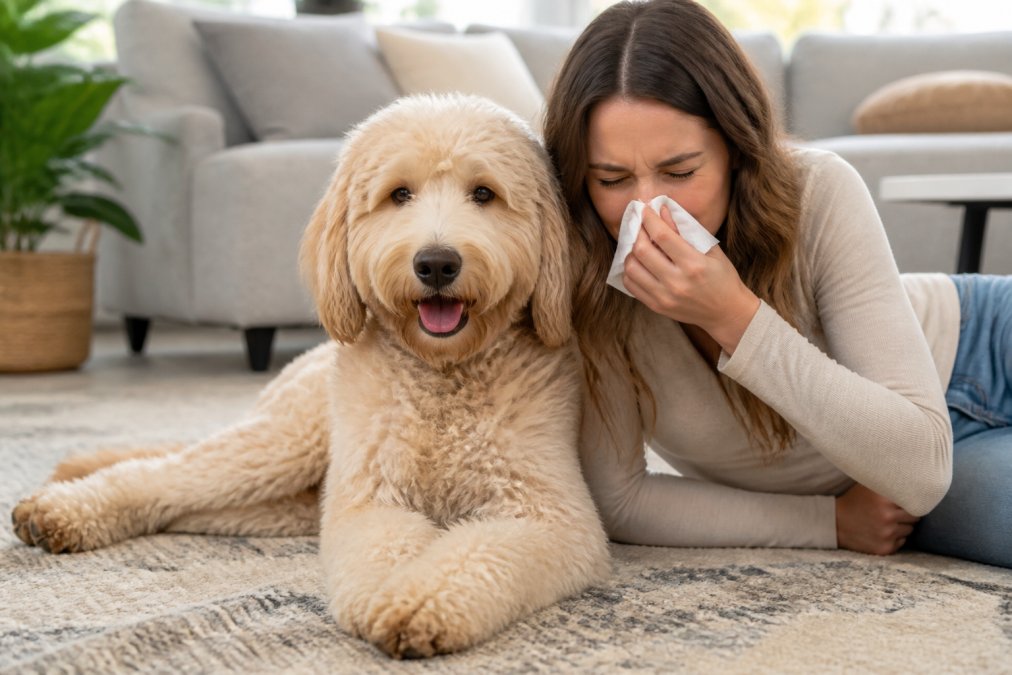
The word "hypoallergenic" is one of the most misused terms in the pet industry. Hypoallergenic means "less likely to cause an allergic reaction", not "guaranteed to cause zero allergic reactions." No dog breed is completely free of allergens. Every dog produces proteins that can trigger a histamine reaction in sensitive individuals.
The term originated in cosmetics in the 1950s and was later applied to dog breeds that shed less or produce fewer allergy-triggering proteins. What the label signals is that certain breeds tend to produce fewer airborne particles and shed less dander into the home environment. That reduced exposure can make a meaningful difference for people with mild pet sensitivity.
At Blue Ridge Doodles, we hear this question constantly from families who want a dog but worry about their immune response. The honest answer is nuanced, and that nuance is exactly what this guide covers.
The Real Source of Dog Allergies: Dander, Saliva, and Sebum
Most people assume dog fur is the problem. It isn't. The actual culprits are proteins produced by the dog's body, primarily a protein called Can f 1, which is found in canine saliva, urine, and skin secretions (acaai.org). When a dog licks itself, those saliva proteins coat the fur. When the skin sheds, microscopic dander particles carry those proteins into the air.
Sebum, the oily secretion from skin follicles, is another significant carrier. When that coat sheds, it releases sebum-coated particles into your furniture, carpets, and air. The immune response in an allergic person is triggered when these airborne particles reach the respiratory system or skin.
According to the American College of Allergy, Asthma and Immunology, dog allergies affect a significant portion of the population, and the primary allergen source is not the fur itself but the proteins produced by the animal's skin and glands.
Why Fur vs. Hair Is Not the Whole Story
Dogs with hair rather than fur have a longer shedding cycle. Their follicles hold onto strands longer, which means fewer loose hairs floating through your home. This is why breeds like Poodles are often described as low-shedding or non-shedding.
But here is what most guides skip: a low-shedding dog still produces dander. The reduction in airborne particles is real and meaningful, but it is not elimination. A dog that doesn't shed much still grooms itself, still produces saliva proteins, and still secretes sebum. The benefit is a lower allergen load in the home environment, not a zero allergen environment.
Are Goldendoodles Hypoallergenic, Or Is That a Myth?
Goldendoodles hypoallergenic status sits somewhere between marketing claim and genuine benefit. Goldendoodles are a crossbreed of a Golden Retriever and a Poodle, and that genetic combination creates enormous variation in coat type, shedding behavior, and allergen production.
Poodles are among the most allergy-friendly breeds available. Golden Retrievers are heavy shedders that produce significant dander. When you cross those two breeds, you get a spectrum of outcomes. Some Goldendoodles inherit a tight, curly, Poodle-like coat with minimal shedding. Others inherit a wavy or flat coat much closer to the Golden Retriever parent, with correspondingly higher shedding and allergen output.

The hypoallergenic myth is not that Goldendoodles offer no benefit to allergy sufferers. The myth is that the label applies uniformly to every dog in the breed. It does not.
The 'Unfurnished' Coat Genetic Trap
The term furnished coat refers to a coat that expresses the characteristic facial furnishings of a Poodle: the beard, eyebrows, and mustache. These furnishings are controlled by the RSPO2 gene. Dogs that carry at least one copy of this gene express furnished coats, which tend to be curlier, lower-shedding, and more allergy-friendly.
An unfurnished coat occurs when a Goldendoodle inherits no copies of the RSPO2 gene. These dogs have a flat, smooth face like a Golden Retriever and a coat that sheds significantly more. By adulthood, an unfurnished Goldendoodle may shed as much as a purebred Golden Retriever.
Reputable breeders DNA-test their parent dogs to identify whether they carry furnished coat genetics. If a breeder cannot tell you whether their breeding dogs are genetically furnished, that is a serious red flag for any allergy-sensitive family.
F1 vs F1b Goldendoodle Coat Types and Allergy Risk
Understanding F1 vs F1b Goldendoodle coat types is essential for allergy-sensitive families. The generation label tells you how much Poodle genetics the dog carries, which directly influences coat texture and shedding behavior.
| Generation | Parentage | Poodle Genetics | Coat Tendency | Allergy Risk |
|---|---|---|---|---|
| F1 | Golden Retriever x Poodle | ~50% | Wavy to curly | Moderate |
| F1b | F1 Goldendoodle x Poodle | ~75% | Curlier, denser | Lower |
| F1bb | F1b Goldendoodle x Poodle | ~87.5% | Very curly | Lowest |
| F2 | F1 x F1 Goldendoodle | ~50% | Highly variable | Unpredictable |
F1 Goldendoodles are a 50/50 split and show the widest range of coat outcomes. F1b Goldendoodles, bred back to a Poodle, carry roughly 75% Poodle genetics. This higher Poodle content makes curlier, lower-shedding coats far more likely.
For families managing dog allergies, an F1b is generally the safer choice. The coat is more consistently furnished and curly, which means lower shedding and fewer airborne particles.
Puppy Coat vs. Adult Coat Transition
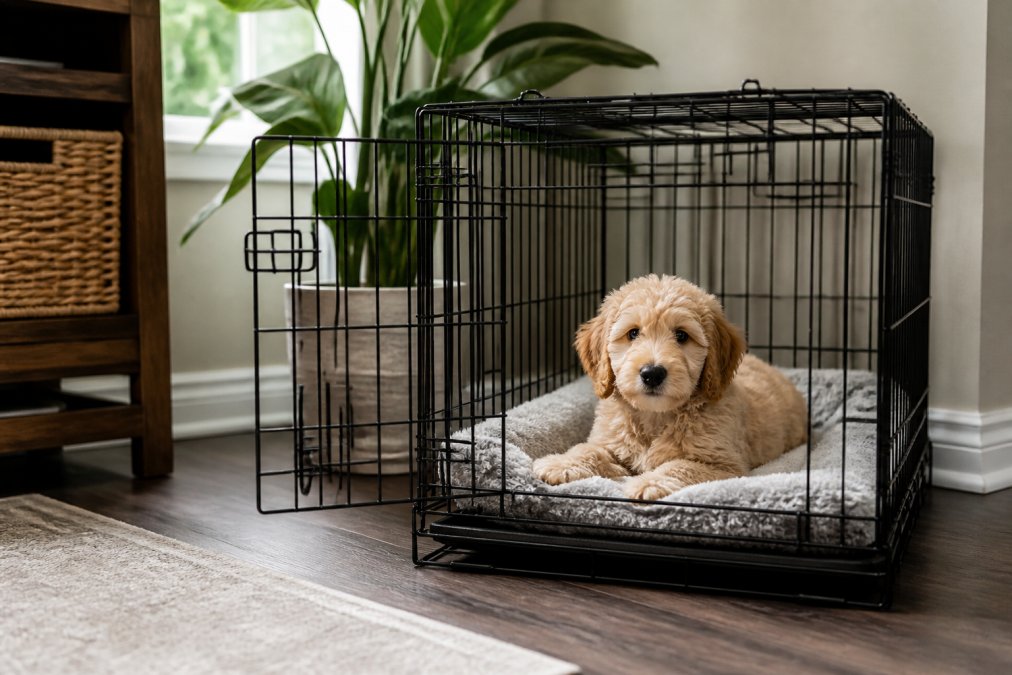
Goldendoodle puppies are born with a soft, fluffy puppy coat that sheds minimally regardless of their genetics. This coat transitions to the adult coat between 6 and 14 months of age. If the adult coat is going to be flat and unfurnished, that fact won't be obvious when you pick up your 8-week-old puppy.
This is why allergy sufferers sometimes report that their Goldendoodle "changed" around the one-year mark. The dog didn't change. The puppy coat simply gave way to the adult coat that was always genetically programmed. Look at the parents' coats, ask for DNA test results, and choose the generation that statistically favors the outcome you need.
How to Test Your Allergy Response Before Bringing a Puppy Home
The single best thing an allergy-sensitive person can do is get a clinical diagnosis before choosing a breed. Allergy testing with an allergist can identify exactly which canine allergens trigger your immune response and how severely. This information changes everything about your decision.
Many people assume they're allergic to dog fur when they're actually reacting to a specific protein like Can f 1 or Can f 5. Knowing your specific triggers gives you a real basis for evaluating whether a low-shedding Goldendoodle is likely to be tolerable.
Consider a trial period with adult dogs from the same breeding lines before you commit. Spend 30 to 60 minutes in a home with a furnished, low-shedding adult Goldendoodle. If you experience a significant dermatological reaction or respiratory symptoms during that visit, that is important information.
Immunotherapy, commonly called allergy shots, is another option worth discussing with an allergist if you're committed to dog ownership. the National Institutes of Health's overview of allergen immunotherapy describes how consistent, controlled exposure to allergens can reduce immune sensitivity over time.
How to Manage Dog Allergies at Home With a Goldendoodle
Managing dog allergies at home is a protocol of consistent habits that collectively reduce your allergen exposure to a tolerable level.
The most important steps include:
- Establish dog-free zones, particularly the bedroom. Keeping the dog out of sleeping areas significantly reduces overnight allergen exposure.
- Wash your hands after handling the dog, and avoid touching your face before washing.
- Bathe the dog regularly. Many allergists recommend bathing every one to two weeks for allergy-sensitive households.
- Change and wash bedding, throws, and soft furnishings frequently. Allergens accumulate in fabric.
- Vacuum with a HEPA-filter vacuum at least twice per week. Standard vacuums recirculate particles; HEPA-filter models trap them.
Grooming Maintenance That Reduces Airborne Particles
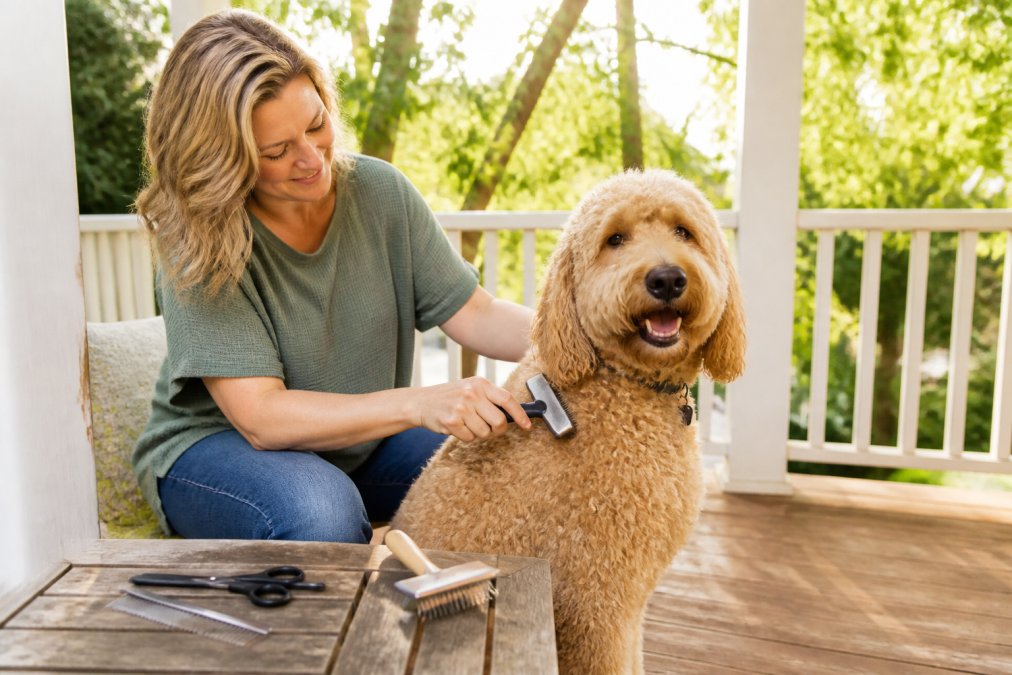
Regular grooming is one of the most effective allergy mitigation tools available to Goldendoodle owners. Brushing removes loose hair, dander, and sebum-coated particles before they become airborne in your home.
For allergy-sensitive family members, outdoor brushing is strongly recommended. Brush the dog on a porch or in the yard so that released particles disperse outside rather than settling into your home.
Professional grooming every six to eight weeks keeps the coat trimmed, reduces matting, and removes accumulated debris. A shorter coat is easier to maintain and produces fewer trapped allergens.
HEPA Filtration and Home Environment Protocols
HEPA filtration is one of the most evidence-backed tools for reducing airborne allergens in the home. A true HEPA filter captures particles as small as 0.3 microns, which includes dander and the protein-coated particles that trigger allergic reactions.
Place HEPA air purifiers in the rooms where the dog spends the most time and in the bedrooms of allergy-sensitive family members. Run them continuously rather than intermittently.
Hard flooring is meaningfully better than carpet for allergy-sensitive households. Carpet traps dander, hair, and sebum and releases them back into the air with foot traffic. Wash the dog's bedding weekly, as allergens concentrate in the areas where the dog sleeps.
Pros and Cons of Goldendoodles for Allergy Sufferers
Pros:
- Furnished, curly-coated Goldendoodles shed significantly less than most breeds, reducing airborne dander and allergen load
- F1b and F1bb generations offer more consistent low-shedding outcomes due to higher Poodle genetics
- Goldendoodles are intelligent, affectionate, and highly trainable, making them easier to manage in allergy-conscious households
- Breeders who DNA-test parent dogs can provide genetic documentation of furnished coat status
- The breed's gentle temperament makes it well-suited to families with children
Cons:
- No Goldendoodle is guaranteed to be allergy-free; individual allergen sensitivity varies too much for any blanket promise
- Unfurnished coat genetics can produce a dog that sheds as heavily as a Golden Retriever, and this isn't always detectable in a puppy
- The adult coat transition between 6 and 14 months can reveal shedding characteristics that weren't apparent at adoption
- Grooming maintenance is substantial; a neglected curly coat traps more allergens, not fewer
- Allergy management requires ongoing household protocols that add real time and cost to dog ownership
For families with mild to moderate pet sensitivity, a well-bred, furnished-coat Goldendoodle from a DNA-tested breeding program is one of the more practical options available. For those with severe allergies, no dog breed is a safe assumption without clinical testing and a genuine trial period first.
The families who succeed with Goldendoodles and allergies are the ones who go in with clear information, realistic expectations, and a plan.
Blue Ridge Doodles has spent over 18 years helping families find the right match. Our puppies are raised in a family environment, vet-checked, and come with a two-year limited health warranty. We're transparent about coat genetics and happy to talk through what generation and coat type makes the most sense for your household's specific situation. If allergies are part of your decision, that conversation matters before you choose a puppy, not after.
For families weighing the question of are goldendoodles hypoallergenic for allergies, the answer is: it depends on the dog, the genetics, and how you manage your home environment. Blue Ridge Doodles breeds Goldendoodles with a focus on furnished coats, health-tested parents, and proper socialization. With our two-year limited health warranty and over 18 years of experience, we give families the information and the puppy they need to make this work. Submit your application and let's find the right match for your family.
Frequently Asked Questions
Are Goldendoodles actually hypoallergenic, or is that a myth?
No dog breed is truly hypoallergenic, and that includes Goldendoodles. The term describes dogs that are less likely to trigger a histamine reaction, not dogs that are allergen-free. Goldendoodles produce canine allergens through their dander, saliva proteins, and sebum just like any other dog. What sets them apart is their low-shedding coat, which keeps fewer airborne particles circulating in your home. Allergy sufferers often tolerate them better, but individual immune responses vary significantly from person to person.
What type of Goldendoodle is best for allergies?
F1b Goldendoodles, which are 75% Poodle and 25% Golden Retriever, tend to produce the curliest, lowest-shedding coats and are generally the best choice for allergy-sensitive families. The higher Poodle genetics increase the likelihood of a furnished, non-shedding coat. That said, genetic variation means no litter is a guaranteed allergy solution. Spending time with the specific puppy before committing, and getting a clinical diagnosis from an allergist, gives you the clearest picture of your personal pet sensitivity.
What is the difference between a low-shedding dog and a hypoallergenic dog?
A low-shedding dog loses very little hair, which reduces the amount of dander and saliva proteins deposited around your home. A 'hypoallergenic' dog is simply marketed as less likely to cause a dermatological reaction or respiratory symptoms in sensitive people. The two concepts overlap but are not the same. A dog can shed minimally and still trigger an immune response if you are sensitive to its specific canine allergens. Low-shedding is a measurable coat trait; hypoallergenic is a spectrum, not a clinical guarantee.
How can I test if I am allergic to a specific Goldendoodle before buying?
The most reliable first step is a clinical diagnosis from an allergist, who can identify whether you react to canis familiaris allergens specifically. After that, arrange a trial visit with the actual puppy you plan to adopt. Spend 30 to 60 minutes in an enclosed space with the dog and monitor for respiratory symptoms or a dermatological reaction. Some breeders also offer a brief trial period. Visiting more than once gives a more accurate read, since reactions can build over repeated exposure.