 listicle
Best Goldendoodle Breeders in Tri-Cities: What to Know
Table of Contents
- What Makes a Reputable Goldendoodle Breeder in Tri-Cities
- Questions to Ask Goldendoodle Breeders Before Committing
- Goldendoodle Puppy Health Testing Requirements
- Average Cost of Goldendoodle Puppies and What Affects Price
- Key Traits of Ethical Breeders vs. Puppy Mills
- What First-Time Owners Should Expect After Bringing Your Puppy Home
- Frequently Asked Questions
Last Updated: August 30, 2026
What Makes a Reputable Goldendoodle Breeder in Tri-Cities
Finding the best goldendoodle breeders in tri-cities requires understanding what separates responsible breeders from operations that prioritize profit over puppy welfare. A reputable breeder invests in genetic health testing, temperament assessment, and proper socialization before puppies leave home. They maintain transparent communication, provide health guarantees, and remain available to support families long after the sale.
At Blue Ridge Doodles, we've spent over 18 years building relationships with families who trust us to deliver healthy, well-socialized puppies. That trust comes from doing the foundational work most breeders skip: genetic health screening, three weeks of crate training, and veterinary clearance before any puppy goes home.

The best goldendoodle breeders in tri-cities don't just breed dogs, they breed with intention. They can articulate their breeding philosophy, explain their selection criteria for parent dogs, and show documentation of health testing. They ask prospective owners detailed questions about lifestyle, living space, and commitment level. If a breeder seems eager to place a puppy with anyone who has cash, that's your first red flag.
Reputable breeders also understand the Goldendoodle variability issue. F1 generation Goldendoodles (Golden Retriever and Standard Poodle cross) produce less predictable coat types than F1B generation puppies (Goldendoodle bred back to Poodle). A responsible breeder explains these differences and manages expectations about shedding, grooming requirements, and temperament variation.
Another hallmark of ethical breeding is the breeder's relationship with their dogs. Visit the breeder's facility or home. Meet the parent dogs. Observe how they interact with people and with each other. Well-socialized parent dogs typically raise well-socialized puppies. If the breeder discourages visits or keeps dogs isolated, move on.
Finally, the best goldendoodle breeders in tri-cities offer ongoing support. They want to hear how your puppy is doing at six months, one year, and beyond. They provide puppy training foundation guidance. They stand behind their health guarantee, which should cover genetic health issues for at least two years.
Questions to Ask Goldendoodle Breeders Before Committing
Before placing a deposit, you need answers to specific questions that reveal whether a breeder operates with integrity or cuts corners. These aren't casual inquiries, they're your due diligence.
Health and Genetics Questions
Start by asking about genetic health testing. The breeder should provide documentation that both parent dogs have been screened for hip dysplasia, elbow dysplasia, and eye conditions through organizations like the Orthopedic Foundation for Animals (OFA) (ofa.org). Ask specifically: "Can you show me the OFA health clearances for both parents?" A breeder who hesitates or claims testing isn't necessary is signaling that health isn't a priority.
Ask about the puppy's vaccination schedule and what vaccines they've already received. Puppies should receive at least two rounds of booster vaccines before going home (aaha.org). Ask whether the puppy will be microchipped before arrival and whether that microchip registration is included in the adoption fee.
Inquire about the breeder's health guarantee. What does it cover? Genetic conditions only, or also infectious diseases? What's the timeframe? What's the process if a health issue arises, will they take the puppy back, provide a refund, or cover veterinary costs? Get this in writing.
Ask whether the breeder has genetic health records going back multiple generations. This shows they're tracking health outcomes across their breeding lines, not just checking boxes on parent dogs.
Breeding Philosophy and Practices
Ask why the breeder chose to breed these two specific dogs. A thoughtful answer reveals whether they're intentional or just breeding available dogs. They should explain what traits they're trying to strengthen in the breed and what genetic concerns they're trying to minimize.
Ask about the breeder's puppy socialization process. How much human contact do puppies get daily? At what age do they meet different people, sounds, and environments? Puppies that receive early socialization, exposure to children, other dogs, car rides, and household sounds, adapt better to their new homes.
Ask about the breeder's crate training and potty training approach. Some breeders invest weeks in foundation training; others send puppies home untrained. Blue Ridge Doodles provides three weeks of crate training before puppies arrive, which dramatically reduces the adjustment period and behavioral problems in the first month.
Inquire about the breeder's puppy application and waitlist process. Responsible breeders don't sell to the first interested buyer. They use applications to screen for good matches and maintain waitlists to ensure they're not overbreeding. If a breeder has puppies constantly available, they're likely prioritizing volume over quality.
Ask what happens if you can't keep the puppy after adoption. Will the breeder take the dog back? This reveals whether they view the puppy as a product or as a long-term commitment they're responsible for.
Goldendoodle Puppy Health Testing Requirements
Responsible breeders don't guess about health, they test. Understanding which tests matter helps you evaluate whether a breeder is doing the work.
Hip and elbow dysplasia screening should be performed on both parent dogs through OFA or PennHIP. These genetic conditions cause joint degradation and arthritis, particularly in larger dogs (vet.cornell.edu). The screening involves X-rays and evaluation by veterinary specialists. A breeder who skips this testing is gambling with your puppy's long-term health.
Eye health screening through the Canine Eye Registration Foundation (CERF) or board-certified veterinary ophthalmologists identifies conditions like progressive retinal atrophy and cataracts that can develop later in life. This test is especially important for Goldendoodles, since both Golden Retrievers and Poodles can carry eye conditions.
Genetic testing for conditions like von Willebrand's disease (a bleeding disorder) and Progressive Retinal Atrophy (PRA) is increasingly available through DNA panels. Responsible breeders use these tests to make informed breeding decisions and communicate risk factors to puppy buyers.
Ask whether the breeder tests for Multicore Myopathy, a muscle condition that has appeared in some Goldendoodle lines. Not all breeders screen for this yet, but transparency about known issues in their breeding lines matters.
The puppy itself should receive a health certificate from a veterinarian before going home. This certificate confirms the puppy is free from obvious congenital defects and has received appropriate vaccinations. Many breeders include this cost in their adoption fee.
Average Cost of Goldendoodle Puppies and What Affects Price
Goldendoodle puppy pricing varies based on several factors, and understanding what drives cost helps you evaluate whether a breeder's pricing is reasonable or inflated.
Puppy pricing depends on the breeder's reputation, location, health testing investment, and puppy socialization practices.
Breeders who invest in comprehensive genetic health testing, early socialization, and training foundation typically charge more than breeders who skip these steps. That premium reflects real costs: OFA testing runs $300-600 per parent dog, veterinary care for pregnant and nursing mothers adds up quickly, and three weeks of puppy training requires time and expertise.
Geographic location affects pricing. Breeders in high-cost-of-living areas typically charge more than rural breeders, though quality varies regardless of location. Delivery options also influence cost, breeders who transport puppies to new owners typically charge a delivery fee.
Demand and waitlist length affect pricing too. If a breeder has a two-year waitlist and consistent demand, they may price higher than a breeder with shorter waitlists. However, a long waitlist isn't inherently a sign of quality, it could also reflect limited supply and high demand for a popular breed.
Ask the breeder to itemize what's included in their adoption fee. Does it cover genetic health testing documentation, initial vaccines and microchipping, crate training, a health guarantee, and ongoing support? Understanding the breakdown helps you compare fairly across breeders.
Be cautious of pricing that seems significantly lower than regional averages. Breeders who undercut the market often cut corners on health testing, socialization, or veterinary care. Conversely, extremely high pricing doesn't guarantee quality, some breeders charge premium prices simply because they can, not because they deliver proportionally better puppies.
Key Traits of Ethical Breeders vs. Puppy Mills
The distinction between ethical breeders and puppy mills comes down to priorities, transparency, and accountability.
Ethical breeders maintain small operations. They breed a limited number of litters per year and focus on quality over volume. They know their puppies' personalities and can match puppies to families based on temperament fit. Puppy mills, by contrast, operate at scale, dozens of litters annually, and treat puppies as inventory.
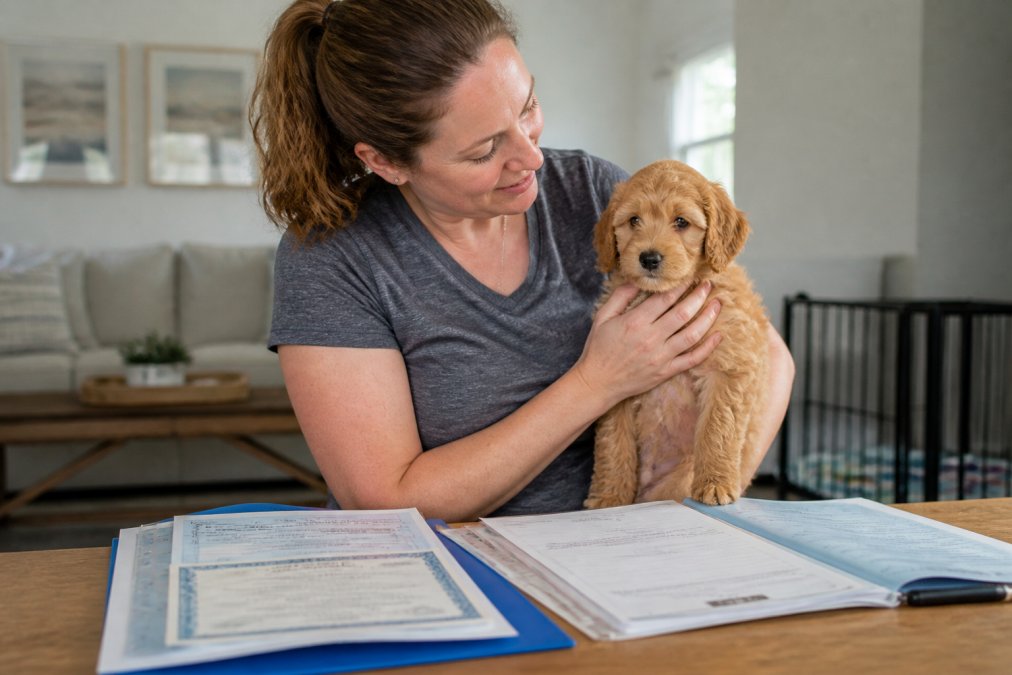
Ethical breeders provide transparency. They invite potential owners to visit, answer detailed questions without defensiveness, and provide documentation of health testing, vaccinations, and breeding history. Puppy mills restrict access, rush the sales process, and avoid providing records.
Ethical breeders screen buyers carefully. They ask about living situation, experience with dogs, lifestyle, and long-term commitment. They may decline to sell to someone they don't think is a good fit. Puppy mills sell to anyone with money.
Ethical breeders maintain relationships with buyers after the sale. They want updates, offer training support, and take puppies back if circumstances change. Puppy mills disappear after payment clears.
Health guarantees differ dramatically. Ethical breeders offer meaningful guarantees covering genetic conditions for two years or longer. They'll replace a puppy or provide refunds if health issues arise. Puppy mills offer minimal guarantees with extensive exclusions.
Ethical breeders limit breeding frequency. A responsible female dog shouldn't produce more than four to five litters in her lifetime. Puppy mills breed dogs continuously until they're no longer profitable, then discard them. This causes severe physical and behavioral problems in breeding dogs and their puppies.
Cost reflects these differences. Ethical breeders charge more because they invest in health testing, proper veterinary care, socialization, and training. They also make less profit per puppy because their overhead is higher. Puppy mills charge less because they cut every corner possible.
What First-Time Owners Should Expect After Bringing Your Puppy Home
The first weeks with a new puppy are critical for establishing routines, building trust, and setting the foundation for long-term behavior. Understanding what to expect helps you avoid common mistakes.
Puppies need a consistent schedule for feeding, potty breaks, and sleep. Most puppies need to go outside after eating, after playing, and after waking from naps, roughly every two to three hours during the day. Accidents happen; patience and consistency matter more than perfection. If your breeder provided crate training foundation, use it. Puppies naturally avoid soiling their sleeping area, so crate training accelerates housebreaking.
Expect behavioral regression during the first two weeks. Your puppy is adjusting to a new environment, new people, and new routines. Some puppies become clingy or anxious. Others test boundaries. This is normal. Maintain consistent rules, provide reassurance, and don't punish accidents or nervousness.
Socialization should continue after the puppy arrives home. Introduce your puppy to different people, environments, sounds, and experiences during the critical socialization window (roughly 3-16 weeks). Well-socialized puppies develop confidence and adapt better to new situations throughout their lives.
Veterinary care is essential. Schedule a checkup within the first week to establish a relationship with your veterinarian and confirm the puppy's health. Your vet will recommend a vaccination schedule and discuss parasite prevention, nutrition, and behavioral concerns.
Puppy training classes offer structure and socialization. Many trainers offer puppy kindergarten classes starting around 8-10 weeks. These classes teach basic commands, bite inhibition, and social skills while exposing puppies to other dogs and people.
Nutrition matters more than most new owners realize. Ask your breeder what food they've been feeding and either continue it or transition gradually to your chosen food. Puppies have different nutritional needs than adult dogs, they need appropriate puppy formulations to support growth.
Expect costs beyond the puppy purchase price. Supplies (crate, bedding, toys, bowls), veterinary care, food, training classes, and grooming add up quickly during the first year. Budget accordingly.
Finally, expect to feel overwhelmed sometimes. Puppies are demanding. They require constant supervision, patience, and consistency. This is temporary, most puppies settle into routines by three to four months. Lean on your breeder for support if you're struggling. A good breeder will answer questions and offer guidance throughout this adjustment period.
Bringing home a Goldendoodle puppy is one of the most rewarding decisions a family can make, but it requires choosing a breeder who shares your values around health, ethics, and long-term puppy welfare. Blue Ridge Doodles has spent 18 years earning the trust of families throughout the region by maintaining rigorous genetic health testing, providing three weeks of crate training before puppies arrive, and standing behind every puppy with a two-year limited health warranty. When you're ready to find your family's newest member, look for a breeder who asks the right questions, provides documentation, and remains invested in your puppy's success long after adoption day. That commitment to excellence is what separates the best goldendoodle breeders in tri-cities from the rest.
=== FAQ ANSWERS (audit these too, same rules) ===
[1] Q: How do I verify if a goldendoodle breeder is reputable? A: Reputable goldendoodle breeders welcome home visits, provide health testing documentation for both parents, offer a written health guarantee, and ask you detailed questions about your home and lifestyle. Check whether they conduct genetic health testing, provide veterinary records, and offer ongoing support after adoption. Ask for references from previous customers and verify their breeding practices align with responsible breeding standards. Avoid breeders who won't let you visit or pressure you to purchase quickly.
[2] Q: What health tests should goldendoodle breeders perform on their dogs? A: Ethical breeders conduct genetic health testing including hip and elbow evaluations through the Orthopedic Foundation for Animals (OFA), eye exams by board-certified veterinary ophthalmologists, and screening for hereditary conditions common in their parent breeds. Goldendoodles inherit traits from Golden Retrievers and Poodles, so breeders should test for conditions affecting both breeds. Request copies of health clearances for both parents before committing. This reduces the risk of hereditary health problems and demonstrates the breeder's commitment to puppy welfare.
[3] Q: What is the average cost of goldendoodle puppies, and why do prices vary? A: Goldendoodle puppy pricing depends on several factors including breeder reputation, genetic health testing investments, generation type (F1, F1b, or multigenerational), coat type, and size variation (miniature vs. standard). Breeders who conduct extensive health screening, provide socialization and training, include health guarantees, and offer ongoing support typically charge more than those with minimal standards. Visit breeder websites for current pricing, as costs vary by location and individual breeder practices. Be cautious of unusually low prices, which may indicate poor breeding conditions.
[4] Q: Are Goldendoodles good family dogs for first-time owners with young children? A: Goldendoodles are generally well-suited for families with young children when they come from responsible breeders who prioritize temperament and socialization. Their affectionate, gentle nature and intelligence make them trainable and adaptable to family life. However, they require consistent training, regular exercise, and socialization from puppyhood. First-time owners benefit from breeders who provide crate training, behavioral foundation, and ongoing guidance. Proper socialization and training during the critical early weeks significantly influence how well the puppy integrates into your household.
[5] Q: What happens if my puppy develops a health issue after I bring them home? A: Reputable breeders provide written health guarantees covering genetic conditions within a specified timeframe, typically two years. The guarantee should clearly outline what conditions are covered, what documentation is required, and what remedies the breeder will offer (replacement puppy, refund, or veterinary cost coverage). Before purchasing, request the full terms in writing and understand the process for filing a claim. Responsible breeders stand behind their puppies and work with you to address health concerns, providing proof of genetic health testing and veterinary clearances.
Frequently Asked Questions
How do I verify if a goldendoodle breeder is reputable?
Reputable goldendoodle breeders welcome home visits, provide health testing documentation for both parents, offer a written health guarantee, and ask you detailed questions about your home and lifestyle. Check whether they conduct genetic health testing, provide veterinary records, and offer ongoing support after adoption. Ask for references from previous customers and verify their breeding practices align with responsible breeding standards. Avoid breeders who won't let you visit or pressure you to purchase quickly.
What health tests should goldendoodle breeders perform on their dogs?
Ethical breeders conduct genetic health testing including hip and elbow evaluations through the Orthopedic Foundation for Animals (OFA), eye exams by board-certified veterinary ophthalmologists, and screening for hereditary conditions common in their parent breeds. Goldendoodles inherit traits from Golden Retrievers and Poodles, so breeders should test for conditions affecting both breeds. Request copies of health clearances for both parents before committing. This reduces the risk of hereditary health problems and demonstrates the breeder's commitment to puppy welfare.
What is the average cost of goldendoodle puppies, and why do prices vary?
Goldendoodle puppy pricing depends on several factors including breeder reputation, genetic health testing investments, generation type (F1, F1b, or multigenerational), coat type, and size variation (miniature vs. standard). Breeders who conduct extensive health screening, provide socialization and training, include health guarantees, and offer ongoing support typically charge more than those with minimal standards. Visit breeder websites for current pricing, as costs vary by location and individual breeder practices. Be cautious of unusually low prices, which may indicate poor breeding conditions.
Are Goldendoodles good family dogs for first-time owners with young children?
Goldendoodles are generally well-suited for families with young children when they come from responsible breeders who prioritize temperament and socialization. Their affectionate, gentle nature and intelligence make them trainable and adaptable to family life. However, they require consistent training, regular exercise, and socialization from puppyhood. First-time owners benefit from breeders who provide crate training, behavioral foundation, and ongoing guidance. Proper socialization and training during the critical early weeks significantly influence how well the puppy integrates into your household.
What happens if my puppy develops a health issue after I bring them home?
Reputable breeders provide written health guarantees covering genetic conditions within a specified timeframe, typically two years. The guarantee should clearly outline what conditions are covered, what documentation is required, and what remedies the breeder will offer (replacement puppy, refund, or veterinary cost coverage). Before purchasing, request the full terms in writing and understand the process for filing a claim. Responsible breeders stand behind their puppies and work with you to address health concerns, providing proof of genetic health testing and veterinary clearances.